-
![]()
Filmmaking Workshop for Kids!
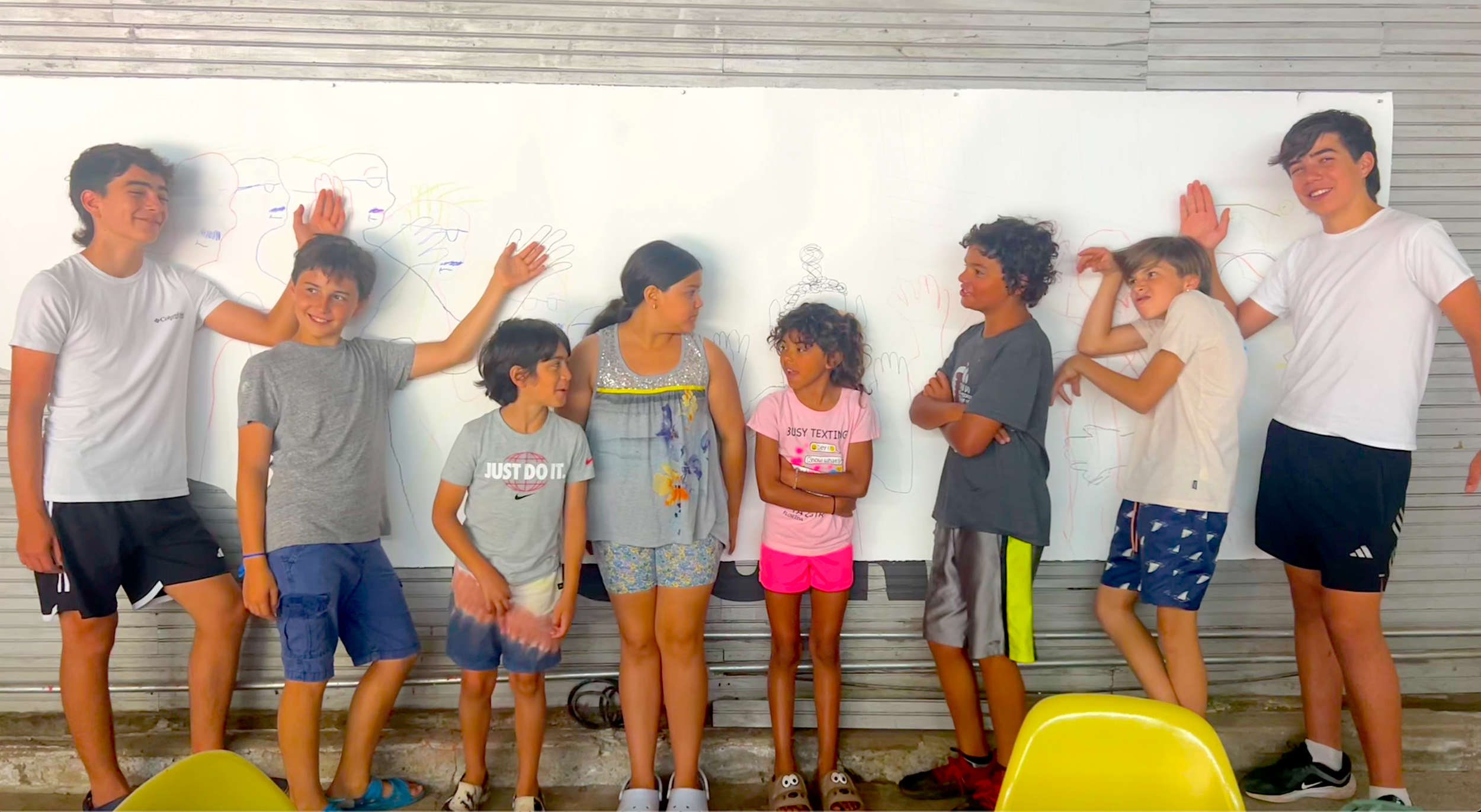
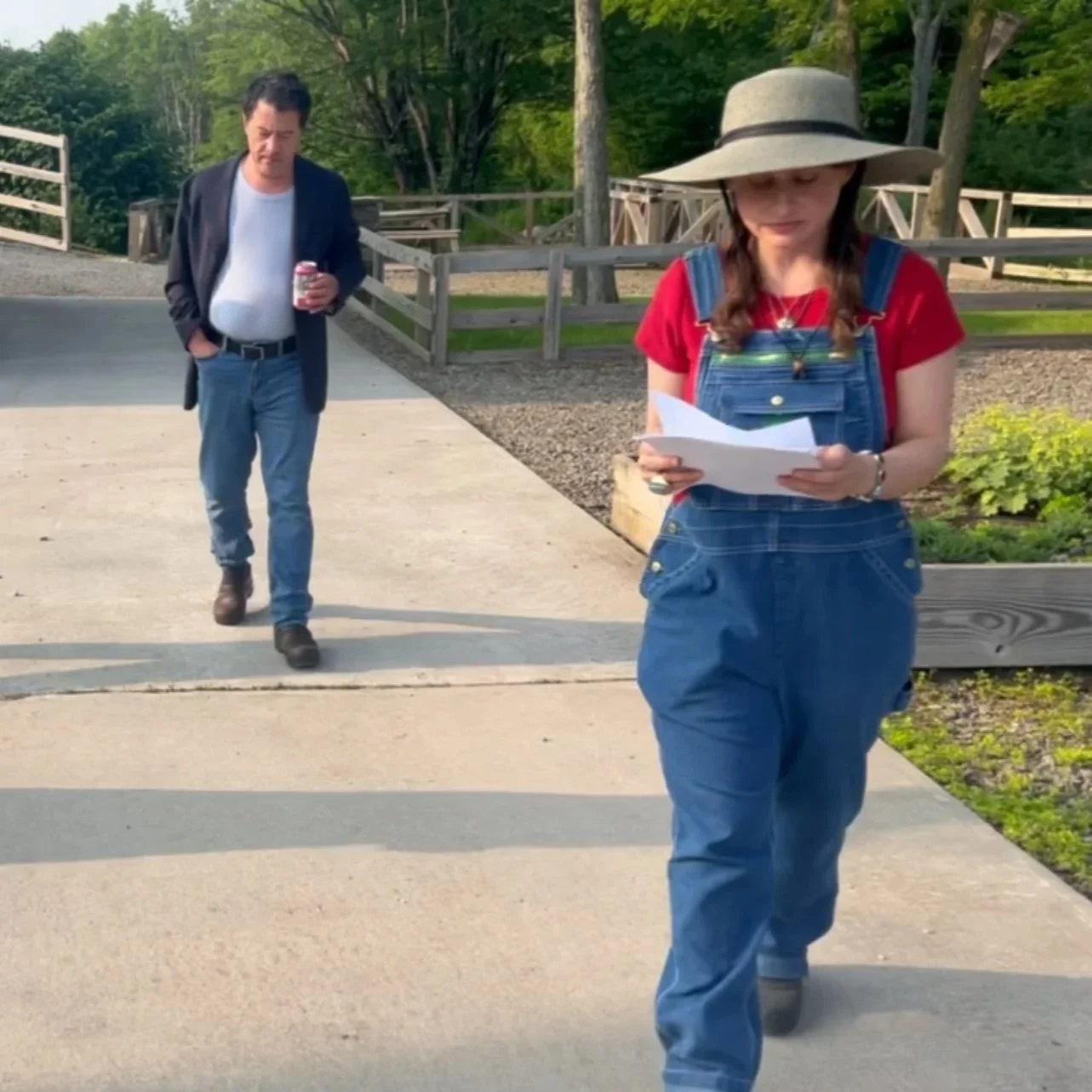
John DiLeva Halpern taught a one day filmmaking workshop to kids in Stamford, NY at OSMOS Station.
-
![]()
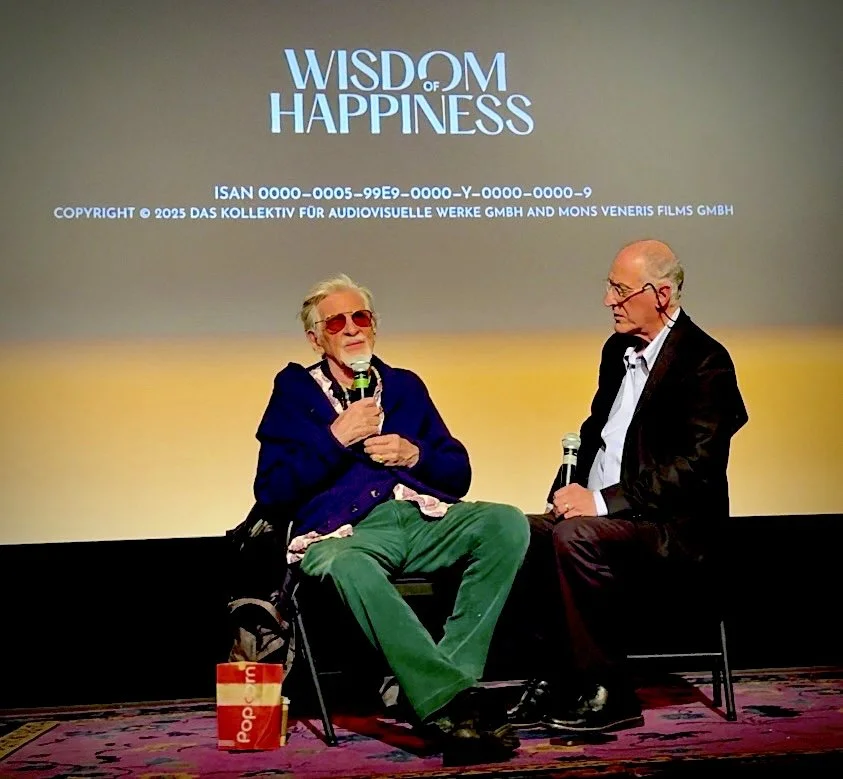
Wisdom of Happiness Q&A John Halpern with Robert Thurman
-
![]()
Breathing room by John DiLeva Halpern
-
![]()
Breathing Room
-
![]()
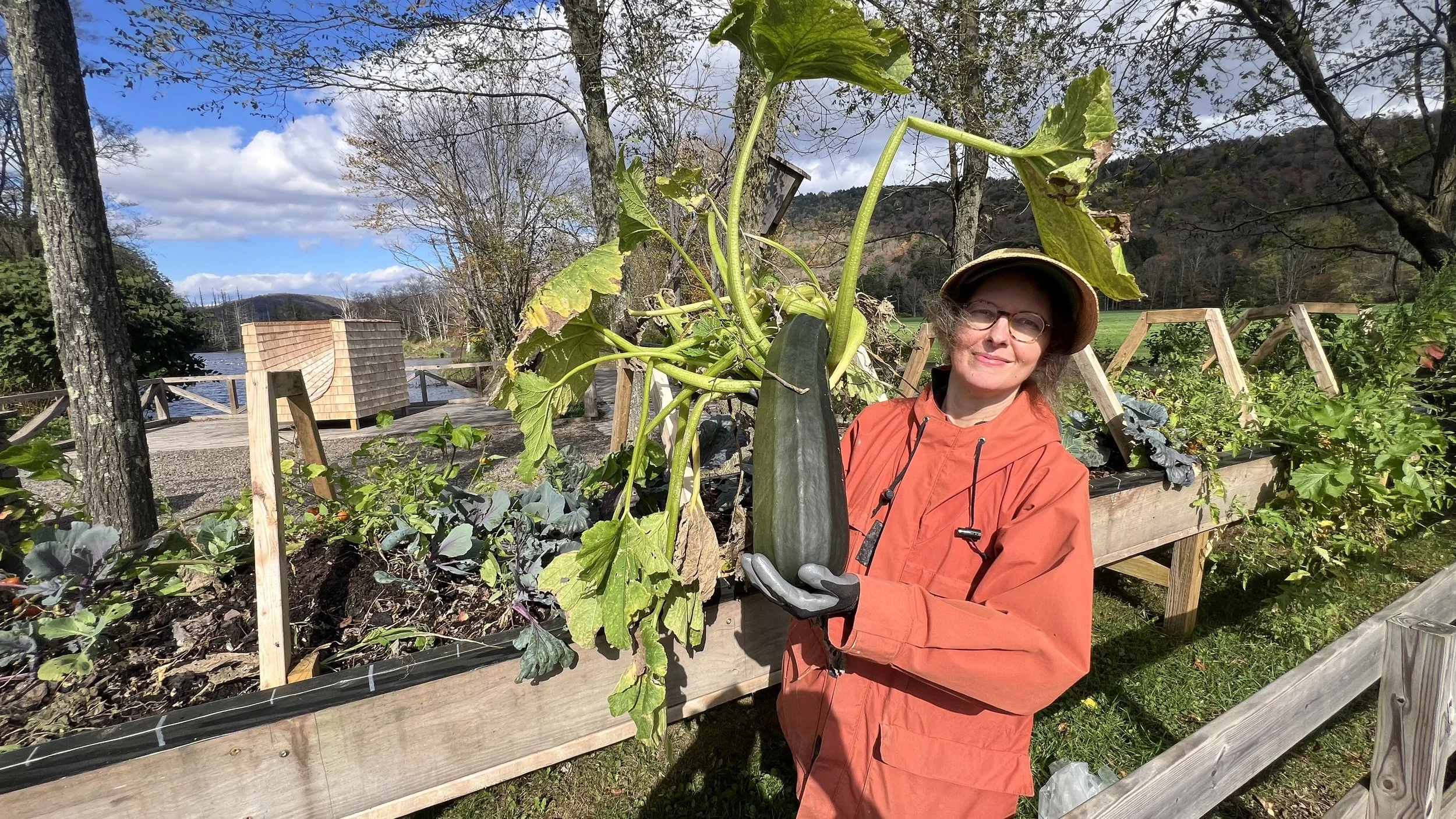
Emily with fruit from the fresh air sculpture
-
![]()
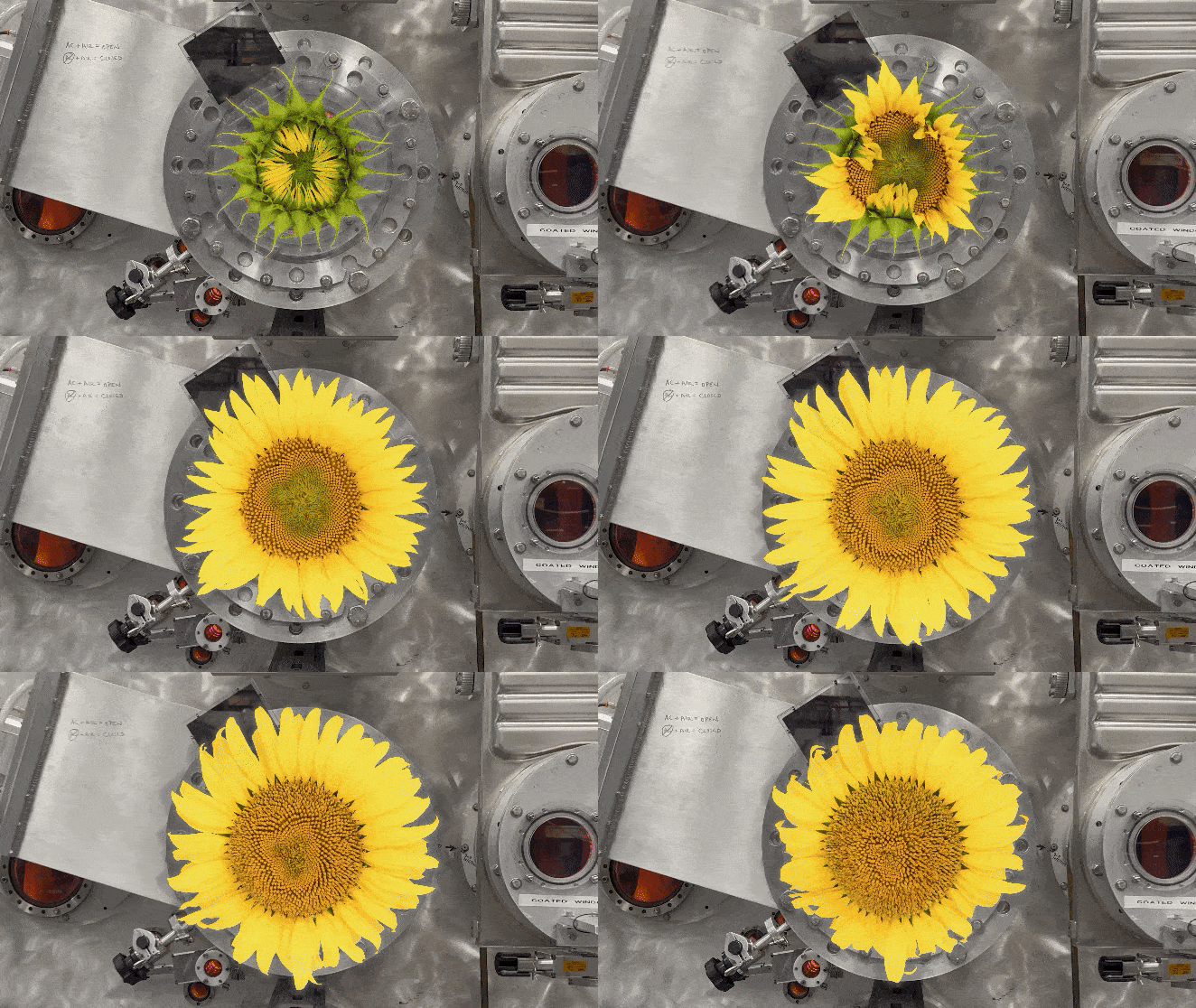
Sunflower Plasma & [Alien] Stardust by Victoria Vesna
-
![]()
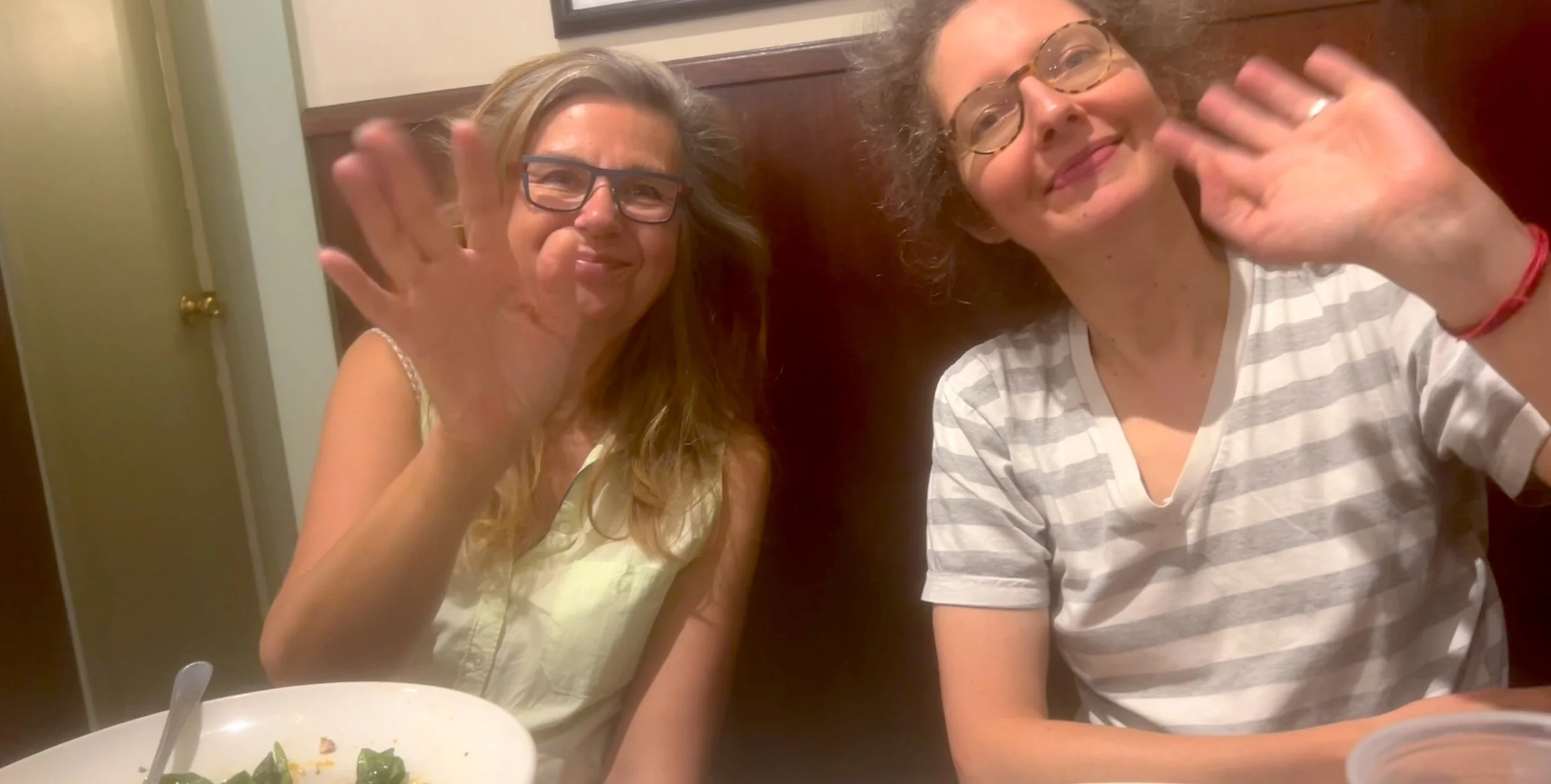
Margret WIbmer & Emily Harris at the Blue Bee
-
![]()
Salon d'Amour by Margret Wibmer
-
![]()
UCLA Visiting Artist
-
![]()
Catskill Film Series
-
![]()
Shingle Valley by Fritz Horstman
-
![]()
Communal Singing with Spacelover
Fritz Horstman and Meredith M. Andrews
-
![]()
Salon d'Amour Magazine
-
![]()
Surfing the Apocalypse Karaoke pre-conference
-
![]()
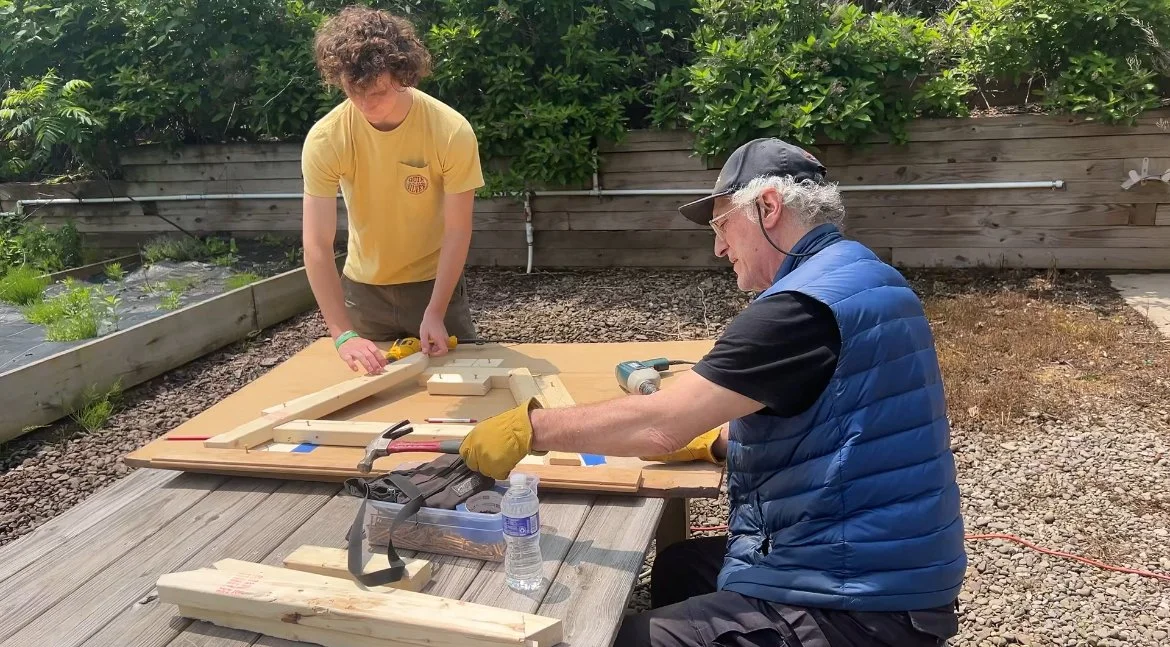
John Halpern and Risdon Reed designing structure for breathing room
-
![]()
Breathing Room Opening Night
-
![]()
Breathing Room
-
![]()
Breathing Room - Closing Event
-
![]()
Communal Singing with Spacelover
Fritz Horstman and Merdeith M. Andrews
-
![]()
Sunflower Plasma & {Alien] Stardust
-
![]()
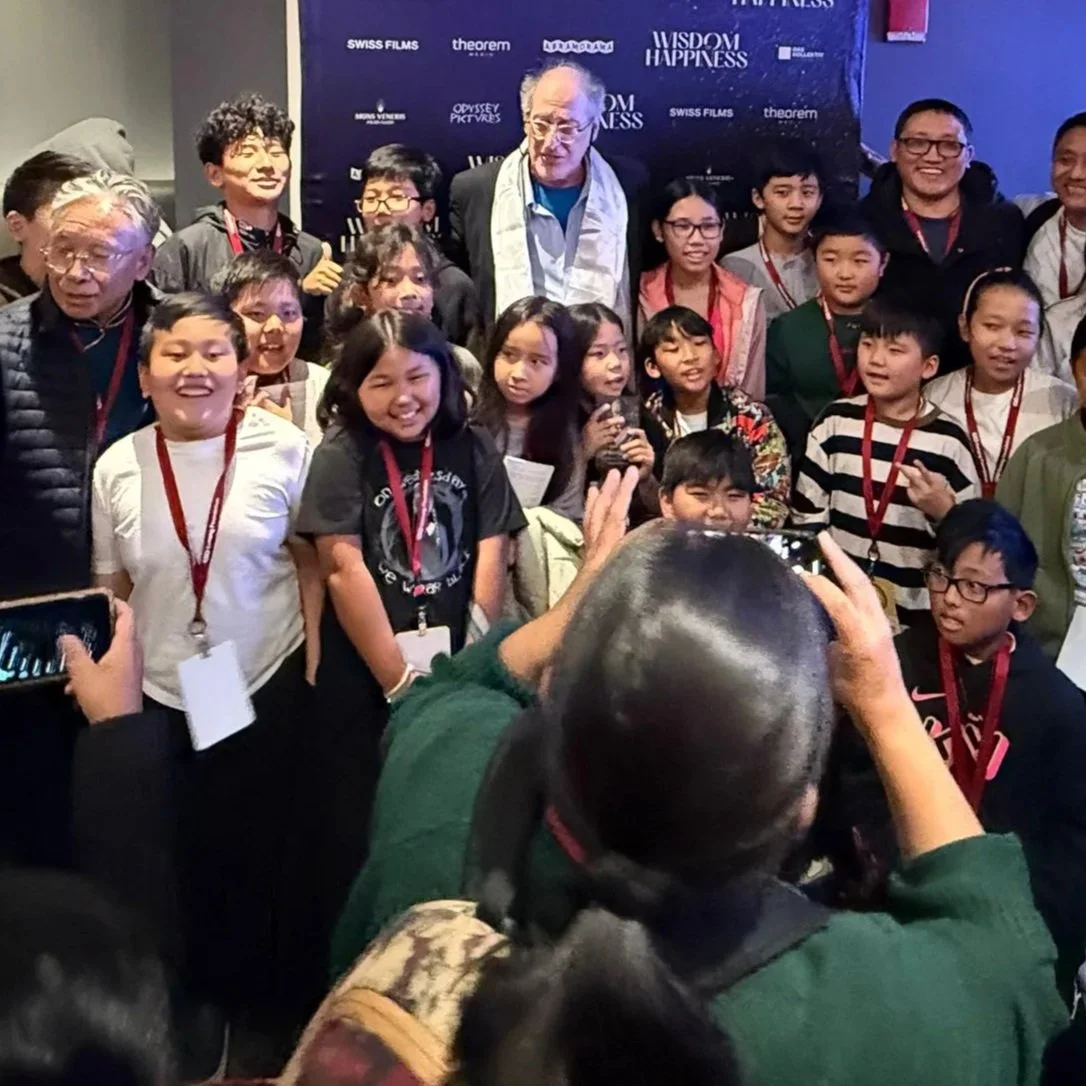
John Halpern at the Quad with Tibetan Children for Wisdom of Happiness
-
![]()
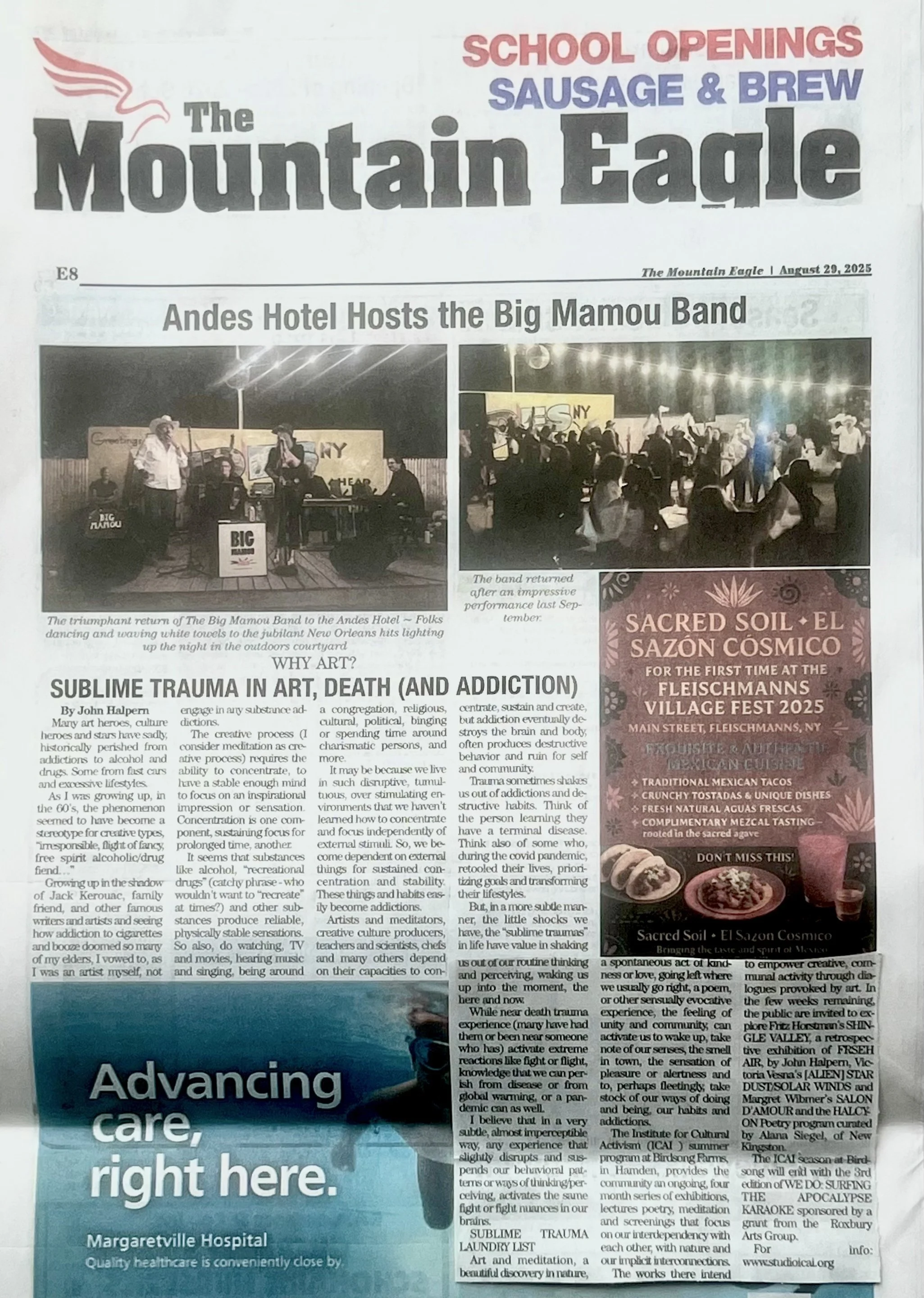
Mountain Eagle article
-
![]()
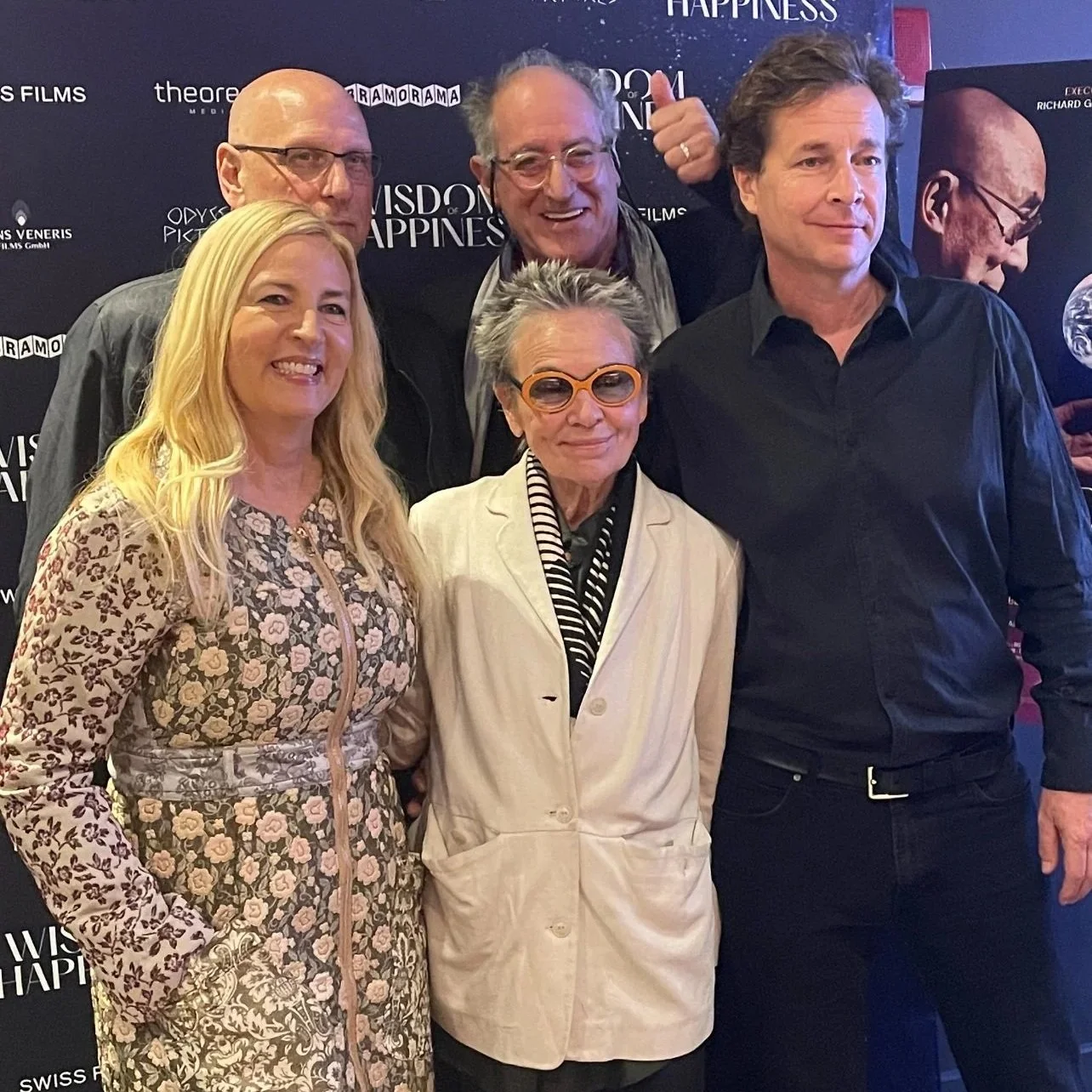
Wisdom of Happiness Screening
-
![]()
Wisdom of Happiness
-
![]()
Surfing the Apocalypse Karaoke
-
![]()
Halcyon Reading Series curated by Alana Siegel
-
![]()
Tuning Fork Live: Jaanika Peerna
-
![]()
WHY ART? article in the Mountain eagle
-
![]()
Halcyon Reading Series

-
REFUGE and JOSEPH BEUYS/TRANSFORMER [Film Screenings and Director Q & A]
Refuge (2006) Directed by John DiLeva Halpern, Written by Les Levine
featuring The Dalai Lama (XIV), Bernardo Bertolucci, Martin Scorsese, Melissa Mathison, Oliver Stone, and others.Filmmaker John DiLeva Halpern turns his lens toward central Asia to focus on the spiritual developments in the West following the 1959 siege on Tibet. He contrasts the Western gravitation toward Buddhism with the journey of Tibetan Buddhists to seek refuge in the West while highlighting the differences between Tibetan Buddhism and Tibetan culture. Refuge includes interviews with such famous filmmakers as Martin Scorsese, Bernardo Bertolucci, and Oliver Stone alongside interviews with prominent meditation masters: His Holiness the Dalai Lama (XIV), Dzongsar Khyentse Rinpoche, Jetsunma Tenzin Palmo. Halpern highlights the state of Buddhism in the Western world, examining controversial issues such as sexual and financial exploitation and other topics as these two cultures merge.
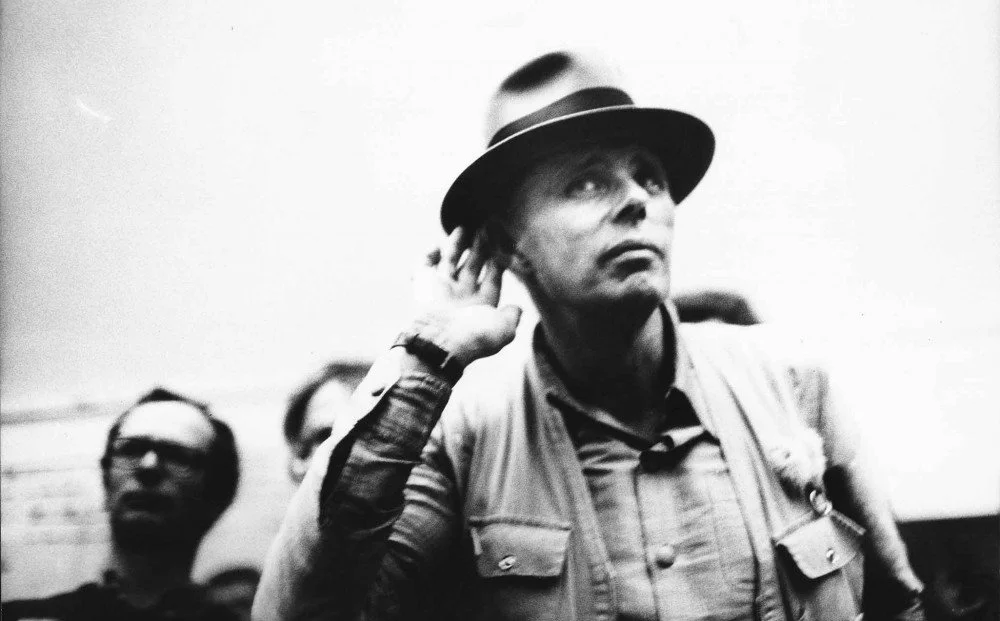
Joseph Beuys/Transformer (1988) Collaboration between Joseph Beuys and John DiLeva Halpern
Called a television sculpture by German TV, is a non-fiction portrait and singular record of Beuys's historic 1979 Guggenheim retrospective. Featuring extensive footage of Beuys himself explaining his theories on art, politics, and social sculpture, focusing on his themes of healing, energy, and transformation, often using materials like fat and felt. The film leverages Beuys’ life and work, lending agency and creative empowerment to the audience. Joseph Beuys/ Transformer is the only comprehensive record of his New York Guggenheim exhibition.
Catskill Film Series was generously hosted in collaboration with Franklin Library, Franklin, NY; Walton Library & Good Taste Epicurean Speakeasy, Walton, NY. The series was initiated to enact cultural activist methods of deconstruction and analysis, introducing people within our Western Castkills region to methods from which the institute was founded and where the institute is based. www.mdsfilms.com -
Tuning Fork Live is a live public interview series inviting cultural activists from around the world to share their work, motivations, sensibilities, and methods. 90-minute encounters provide dialogues between guests and audiences. The series explores collective capacities and strategies for enduring cultural change, analyzing diverse methods of “cultural activism” while growing a global network of engaged practices. The TFL cultivates awareness as the medium for social change, treating conversation as cultural infrastructure for synthesizing just and resilient futures.
John Halpern, interviewer. Emily Harris, producer. Halpern has interviewed cultural icons: Joseph Beuys, Martin Scorsese, Matthieu Riccard, Melissa Mathison, Jetsunma Tenzin Palmo, H. H. the Dalai Lama, Oliver Stone, Allan Kaprow, Carolee Schneeman, Christo as well as infamous ex-terrorist Kashmiri freedom fighters, Native Americans on the U.S. border and persons in the street. His journalism has appeared in The Huffington Post in broadcast media and in print and radio, throughout his 50-yr career.Tuning Fork FM is a bi-weekly radio broadcast out of the Catskill Mountains. The show features regional and international guests, original music, covering topics such as: films, art, cultural activism, contemplative sciences, and highlights the merging of urban diaspora with traditional mountain culture. 24 shows annually, since 2023.
-
Culture Declares Emergency (CDE) is a growing movement of individuals and organizationsinvolved in arts and culture who declare a climate and ecological emergency. This means truth-telling, care-taking, and change-making. Cultural Activism International Project, members since fall of 2023, hosted the first Global CDE Hubs meeting within a public forum. We welcomed all to learn about CDE’s projects, methodology and networking.
Participating Declarers were from Africa, Australia, Great Britain, Spain, U.S.A. -
A Portrait of Michel [Film Screening and Director Q&A]
Dr. Michel Saadé was abducted in Damascus in 1978 by the Hafez al-Assad regime and never seen since. A Portrait of Michel is an investigation into the abduction of Gedeon’s uncle. After finding a pouch that belonged to Michel containing his miscellaneous objects, documents, and scraps of paper, Gedeon created the film, combining photographs of these “Objects of Evidence” with voice-over interviews by family members, as well as vintage photographs, music, and archival 8mm family footage. Reconstructing a true-crime mystery that intersects with contemporary politics, A Portrait of Michel engages the audience in Gedeon’s investigation of the truth. Her creative approach to the sparse material leaves the conclusion for the viewer to decode.
Christine Gedeon, a visual artist, was born in Aleppo, Syria, raised in the US, and lives between Berlin and New York. Since the start of the war, Gedeon’s work has focused on her family history in Syria in various mediums. Her work has been shown worldwide, with recent grants from the Berlin Cultural Senate, the Goethe Institute, and the Harpo Foundation. Her book Aleppo: Deconstruction | Reconstruction was published in 2020 by Kerber Verlag in Germany. www.christinegedeon.comScreenings organized by ICAI and hosted in collaboration with Bushel Gallery, Delhi, NY & Good Taste Epicurean Speakeasy, Franklin, NY.
-
On this episode of Tuning Fork Live (Episode #48), we tune into ABC No Rio 45 Years as a living broadcast from one of New York City’s most enduring sites of cultural activism. Framed through conversation rather than commemoration, the exhibition traces the collective pedagogies that emerged at 156 Rivington Street—from 1970s New York activist art practices, including collaborations by John Halpern and the Art Corporation of America, through the Colab period, the “GayBC” years, alliances with the squatting movement, and the punk and hardcore matinees, into the 21st century DIY community arts center. Read through the lens of cultural activism and DIY pedagogy, ABC No Rio appears not as an institution but as an ongoing experiment in horizontal learning, collective authorship, and art as social infrastructure. As a new building rises, this episode resonates as an attunement exercise: listening to how culture is built, defended, and transmitted across generations through collaboration, conversation, and shared responsibility.
-
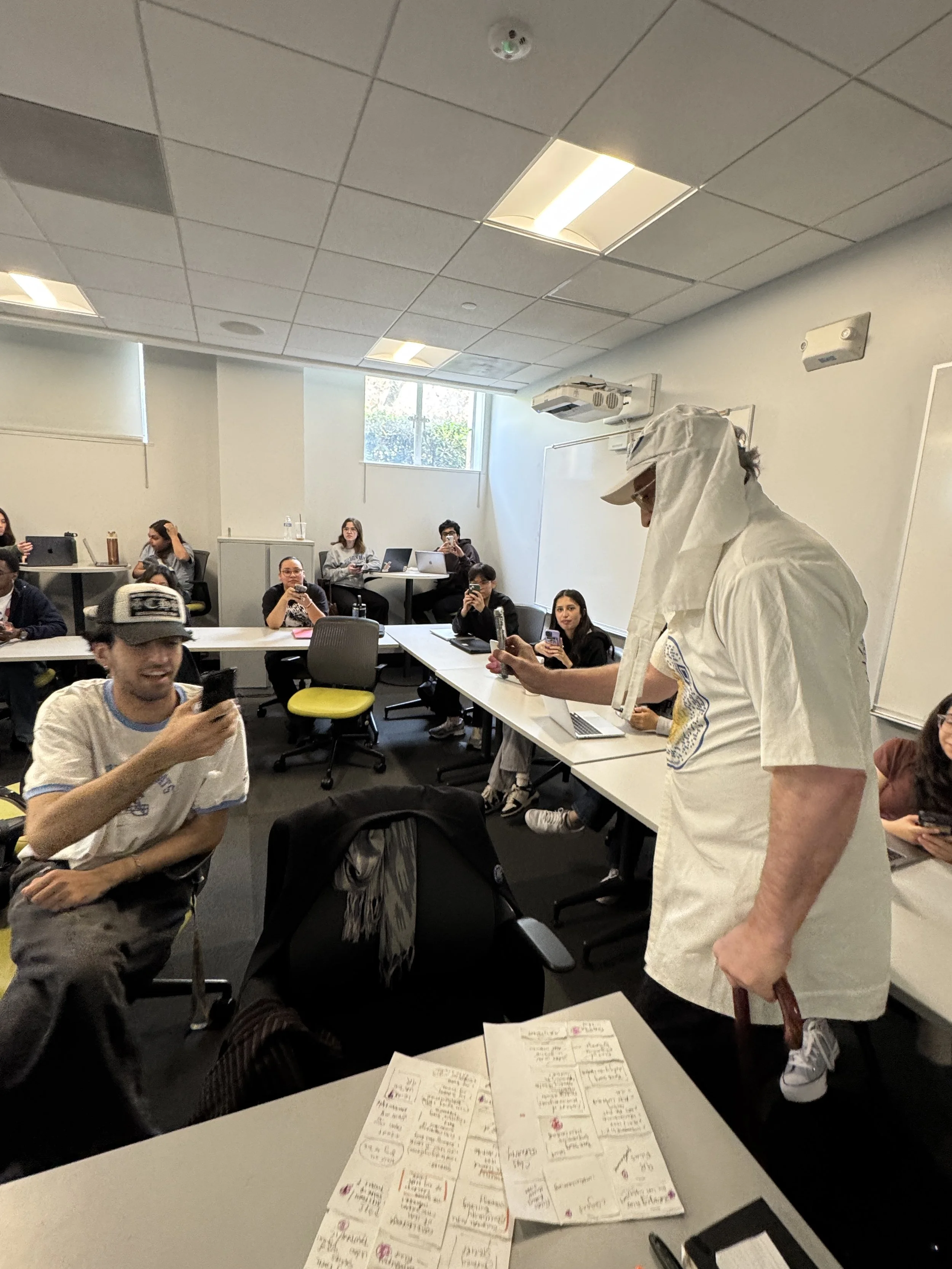
Professor Victoria Vesna, Ph.D., media artist and director of the Art|Sci center at UCLA, invited John DiLeva Halpern, artist and ICAI co-founder to lecture in her BioTech+Arts Honors Class. This is a summary of over 30 student blog responses:
The collected students’ reflections describe John Halpern’s classroom visit as a live demonstration of how existing cultural systems can be intervened and transformed from within. Rather than delivering a lecture, Halpern enacted his method: immediately entering with a QR code on his mobile device, and moving deliberately through the room converting the classroom itself into a participatory cultural field through a virtual QR portal. This approach reflects a core principle of cultural activism: change occurs not by rejecting systems outright, but by reprogramming how they function.
Halpern’s presentation of Bridging (1977) exemplifies this strategy. By staging artists on major New York City bridges at a time when mass media was saturated with fear-based imagery and terrorism narratives, Bridging intervened directly in the media system itself. Broadcast widely on global television news, the action redirected attention from violence toward spectacle, color, and collective presence - demonstrating how mass media news could be transformed from a vehicle of anxiety into a platform for empowerment and creative engagement, Good news sells.”
This method extends into Halpern’s later projects: New Consume, reframing consumer culture not as passive consumption but as conscious, creative engagement. Rather than opposing consumerism, New Consume intervenes in it - inviting participants to be aware of their choices, attention, and agency within systems of exchange and new consciously charged products. Students noted how this emphasis on participation - through contemplative breathing, storytelling, QR activations, and reflective pauses - dissolved boundaries between presenting artist and students.
In dialogue with Joseph Beuys’s notion of “social sculpture,” Halpern’s work illustrated a shared conviction: when artists step inside existing systems - media, consumption, education - and transform how they operate, art becomes a catalyst for ethical awareness, collective responsibility, and durable, innovative cultural change, rather than a fixed system and commodities meant only to be observed.
“We were no longer just passive students but part of the activism.”
“It made me want to figure that out for myself.”
“He doesn’t care what people think of his work—he knows he’s doing what he was called to do.”
“That kind of clarity was inspiring.”Across the reflections, students consistently describe art - especially Halpern’s performative, participatory approach - as a force that loosens fixed self-images, reframes purpose, and enables new ways of understanding who they are in relation to others, media, and society itself.
Across the reflections, students move from identity anxiety - marked by confusion, self-consciousness, and fear of misinterpretation - toward identity agency, where self-understanding emerges through participation, purpose, and the confidence to act without needing approval.
Drawing on student reflections, the encounter with John Halpern can be theorized as a movement from identity anxiety toward identity agency enacted through performative pedagogy. From a psychological perspective, students initially display what social theorists describe as evaluative self-consciousness - a heightened concern with interpretation, correctness, and social legibility - triggered by the disruption of familiar classroom norms. Rather than resolving this anxiety through explanation or instruction, Halpern’s performative strategies sustain a state of productive ambiguity, temporarily suspending habitual identity scripts. In this liminal condition, participants are relieved of the demand to perform mastery, allowing attentional resources to shift from self-monitoring to relational engagement.
-
In Tuning Fork Live Episode 50, Alex Halpern’s feature-length documentary, Nine Good Teeth, about "Nana," his 100+ year grandmother, is enriched through the recollections of Halpern and editor Angelo Corrao. The conversation adds depth to Nana's story revealing how specific moments - Mary’s blunt humor, long-simmering family rivalries, surprising encounters such as late-night visits from Jack Kerouac, illicit love affairs, and an unexpected murder - were shaped through careful listening, pacing, and ethical restraint. Their conversation offers rare insight into creative practice and collaboration, showing how trust between subject, filmmaker and editor allowed intimate material to remain insightful rather than sensational. This episode illuminates Alex's documentary signature as an innovative process aligned with the core values of the Institute: contemplation, interdependence, and collaboration. Halpern shared early video experiments as well, collaborating with his longtime friends John Henson, Tom Stern and Alex Winter.
-
In Tuning Fork Live Episode 49, Jaanika Peerna discusses her upcoming trip to the Dolomites for her first encounter with a living glacier, her recent move to Portugal, and formative childhood memories of protest singing in mass demonstrations for Estonian independence—experiences that shaped her relationship to audience and cultural activism. The episode reveals how Peerna’s performances frame contemplation in motion as a shared practice, inviting audiences to co-create a field of attention and witnessing, as shards of ice are passed hand to hand, melt and dissolve. Through this participatory approach, performance becomes a communal, contemplative experience, transforming climate loss from an abstract concern into an urgent, visceral one, demonstrating how art fosters empathy, interdependence and social engagement through collective experience rather than instruction. www.jaanikapeerna.net
-
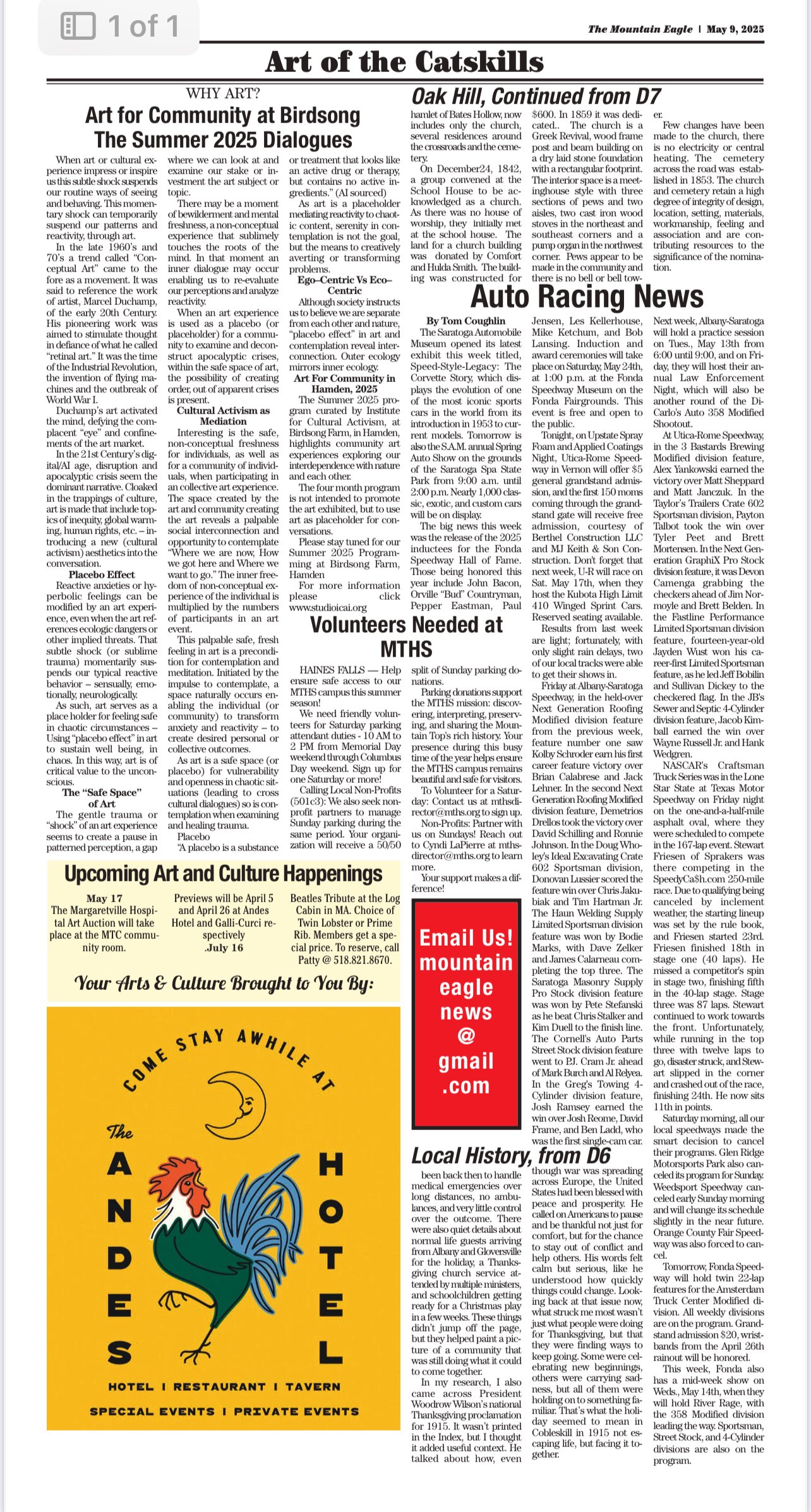
PUBLIC ART at BIRDSONG by I.C.A.I. Regional and International artists for Public Art & Dialogue. The summer series hosted surprising art encounters touching topics of breath, [alien] stardust, love, water, spoken word, pop-ups, workshops, karaoke singing, film screenings, immersive film installations, concerts, and more. All events & exhibitions feature regional and international artists with the primary focus of activating conversations and engagement through shared experience, respecting individuals and their contributions to collective cultural resource.
The summer curriculum postures art not as representation or protest, but as cultural infrastructure achieved through engaged public art events. It presents a living system, symbiosis of collective values, creating new narratives through collaboration, as the foundation for durable social change.
This curriculum teaches cultural activism as a lineage-based, awareness-driven art practice, where culture itself becomes the primary medium of social transformation.Together, these foundations establish culture—perception, attention, ritual, and shared meaning—as a primary site of power and transformation.
Exhibitions: June 6-29, Breathing Room:John DiLeva Halpern;
July 5-30, Sunflower Plasma & [Alien] Star Dust – Cosmic Encounters in Two Acts:Victoria Vesna; August 8 & 9, Salon D’Amour: Margret Wibmer; August 9 - September 30, Shingle Valley: Fritz Horstman.
Halcyon Reading Series, curated by Alana Siegel:Halcyon Series: On the Reciprocity of Harmony, 7 Parts: Alana Siegel; Antiphon/Schmantiphon: Deirdre Larkin & Tom Groves; Feeding Off Each Other: Daria Fain, Robert Kocik and Brenda Ijima,
Partners & Sponsors: Birdsong Community Farm, Hamden, NY; Bermant Foundation, Los Angeles, CA; Good Taste Epicurean Food Market, Franklin, NY; Origins Nursery & Café, Cooperstown, NY; PEACH, Wien; Roxbury Arts Group, Roxbury, NY; Synder’s Greenhouse, Delhi, NY; Tri-County Glass, Oneonta, NY.
Thank you to our incredible team of volunteers and collaborators!
Nancy Simko, Risdon Reed, John Kahn, Bruce Milner, Elaine Angelopolous, Beth Grey, Alana Siegel, Elizabeth Kaden and the sophisticated team of builders at Birdsong. -
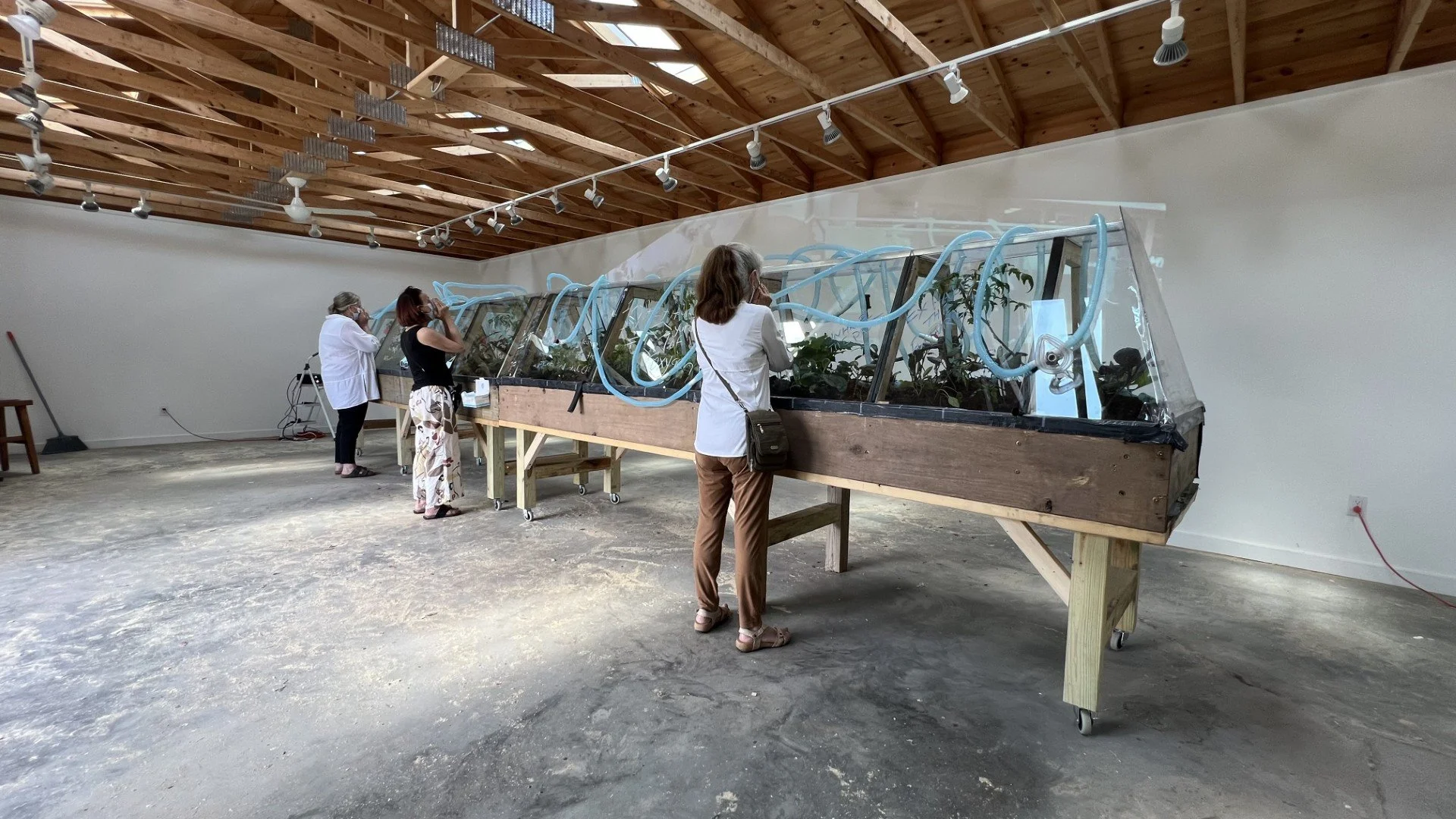
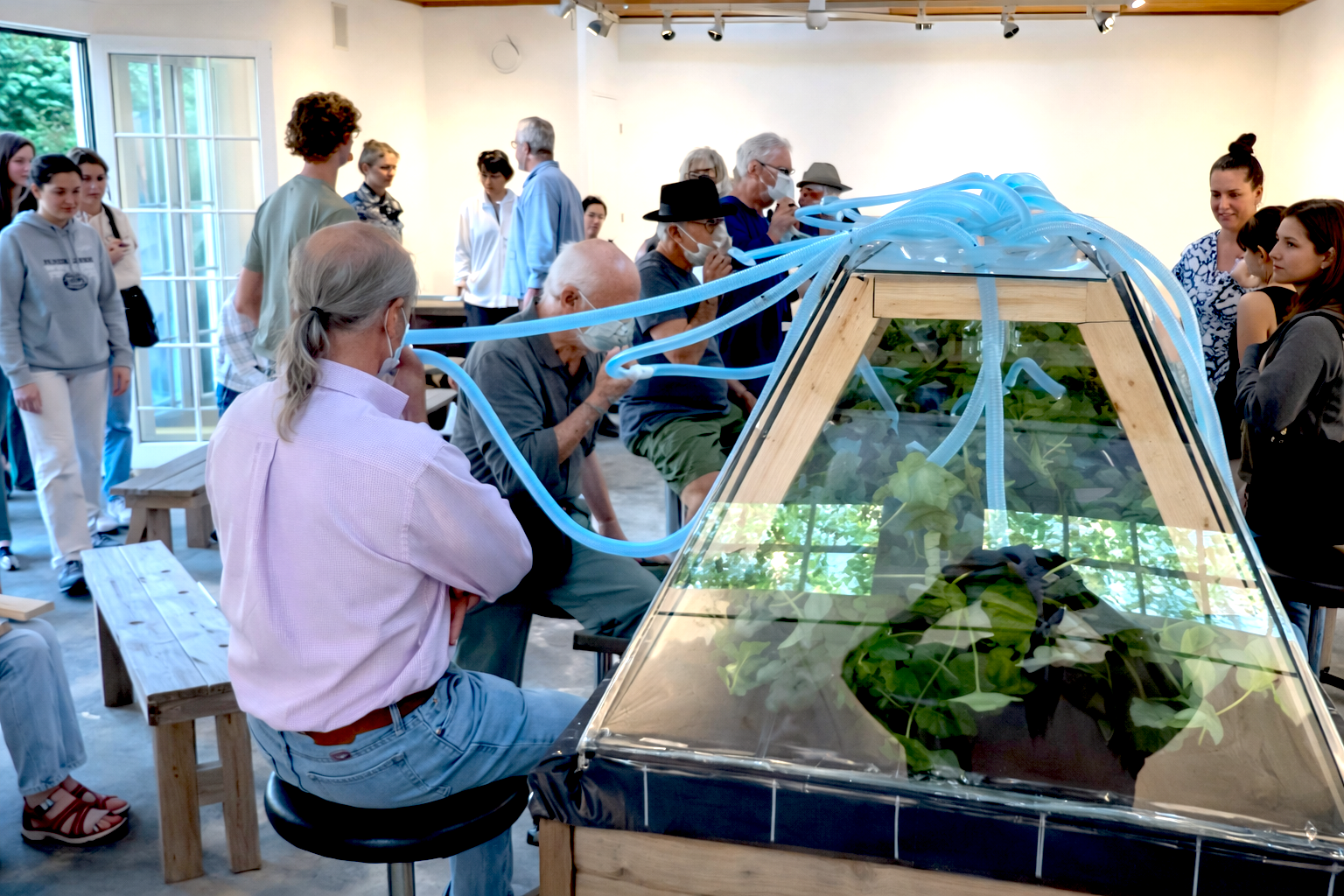
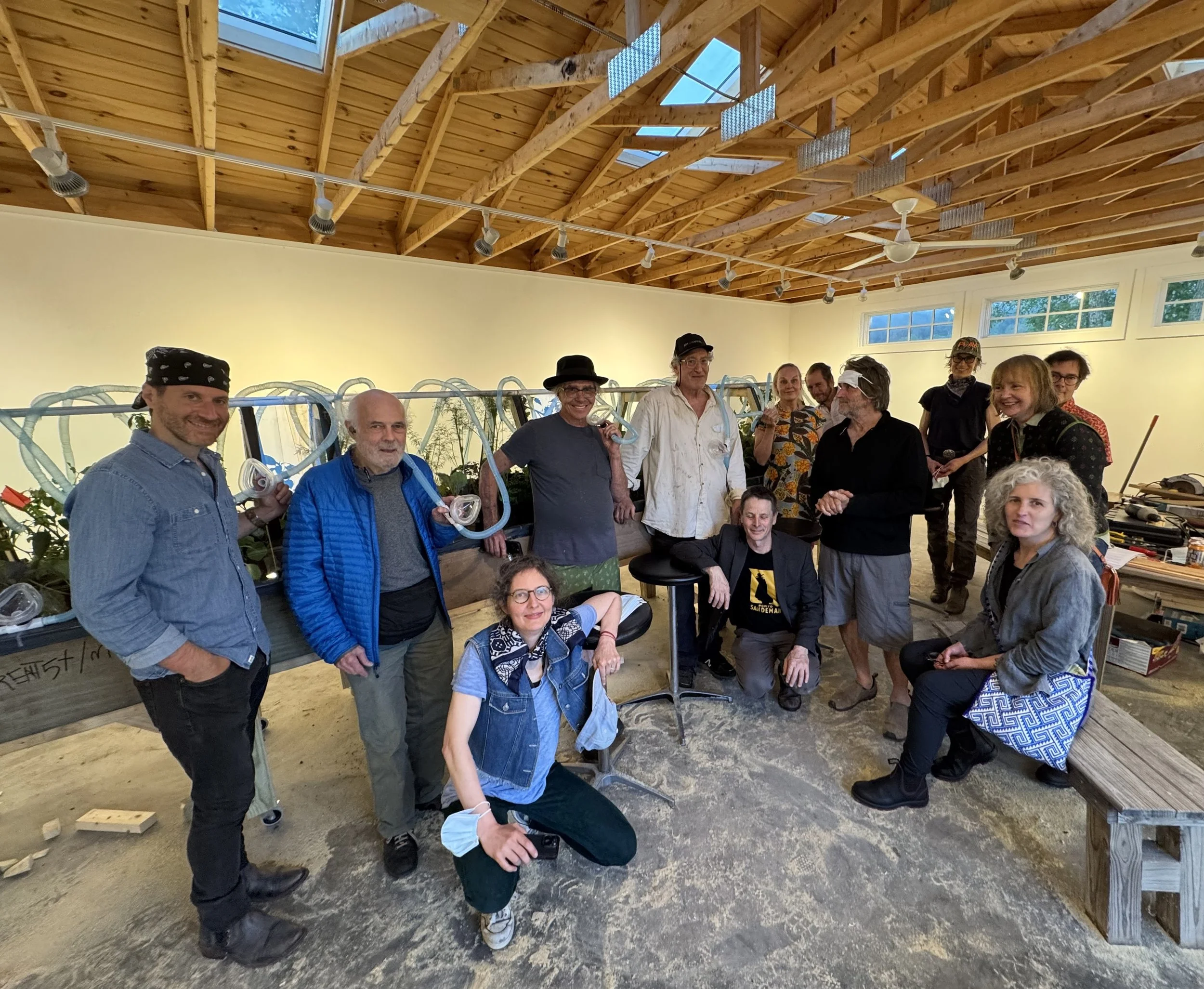
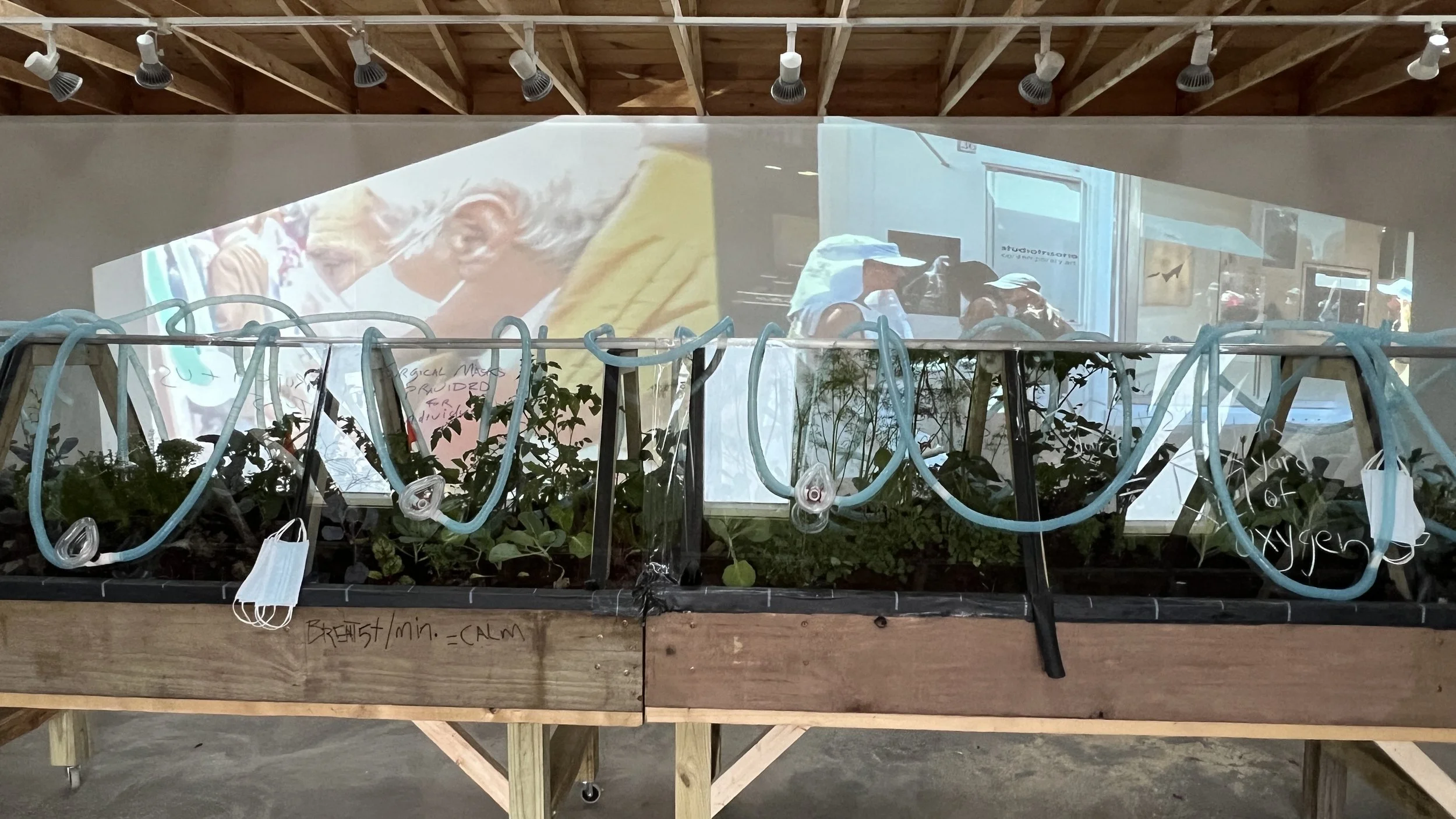
Marking the 35th anniversary of Fresh Air, Breathing Room, by John DiLeva Halpern, consists of a 24-foot long hermetically sealed glass chamber centered within a traditional gallery space within a non-traditional community farm. Filled with earth, O2 producing plants, blue respiration tubes, filters and masks, the chamber becomes a sculptural interface where plants and people interact, and breath becomes a vital medium for the interdependency of people with nature and of people with one another. Thus, framing mutual reliance as both a biological and ecological social necessity. The installation is rooted in immersive engagement, education and the collective authoring of future narratives. Visitors breathe interdependently with plants and each other, creating air for the future by exchanging their CO2 with the O2 created by plants.
Video projections from early global FRESH AIR mobile units collapse time and geography, situating these events within a cultural history of environmental consciousness and participatory art. The project integrates art, dialogue, and community programming to form a sensorial commons—inviting audiences to engage consciously with one another, imagining and co-creating new sustainable futures, together.
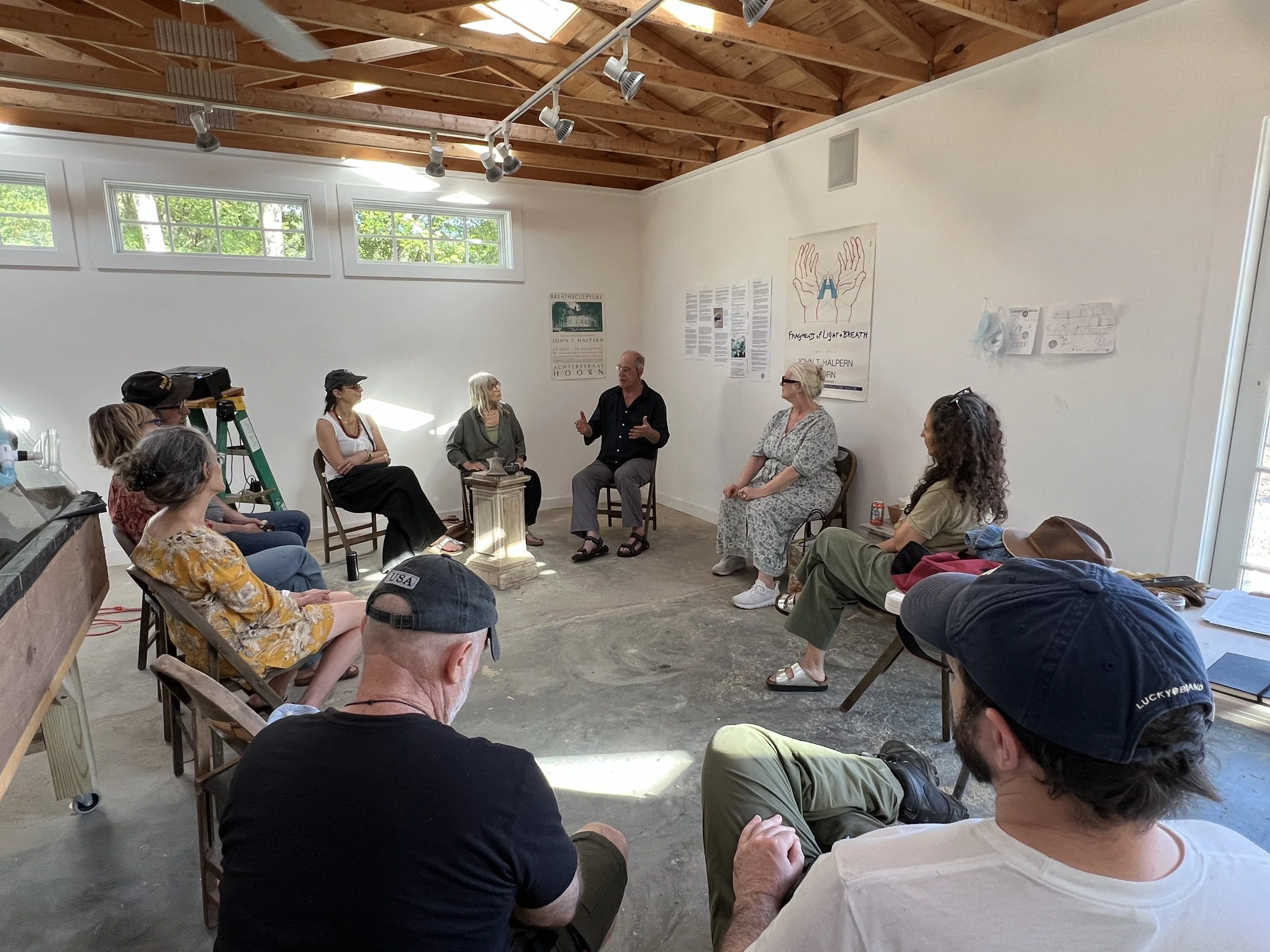
The Breathing Room concluded with a Cultural Activism Empowerment led by Halpern, analyzing conditioned patterns of rigid concepts of self-image and anxiety versus social agency, cooperation and accountability. The afternoon focused on the interdependency of earth, air, fire, water, and space. Invited yogi Carolyn Christie activated the 5 element breathing practice.
John DiLeva Halpern is known for his pioneering conceptual practice—shaped by endurance, ecology, meditative attention, and his theory of sublime trauma, which frames vulnerability and intervention as catalysts for heightened awareness and transformation. An internationally recognized conceptual sculptor and filmmaker based in Delhi, NY; Halpern lived in an hermetically sealed glass house for 10 days with 10,000 plants, breathing once per minute in conjunction with a museum exhibition in Holland, 1989. FRESH AIR toured city streets for 5 years. www.johnhalperntheworks.com
Special thanks: Nancy Simko, Risdon Reed, John Kahn and Bruce Milner.
PRESS RELEASE; TRI-FOLD -
[SUN]Flower Plasma & [Alien] Star Dust—Cosmic Encounters in Two Acts by Victoria Vesna present a fusion of art, science, and planetary storytelling, turning cosmic phenomena into shared human reflection. Launched during the Sun’s solar maximum, the work meditates on volatile solar energies alongside human-driven climate disruption, while the second act, her [Alien] Star Dust App (for mobile), descends to the infinitesimal—micrometeorites mingling with polluted dust—to observe that what we breathe, inherit, and cannot easily distinguish, actually connects us.
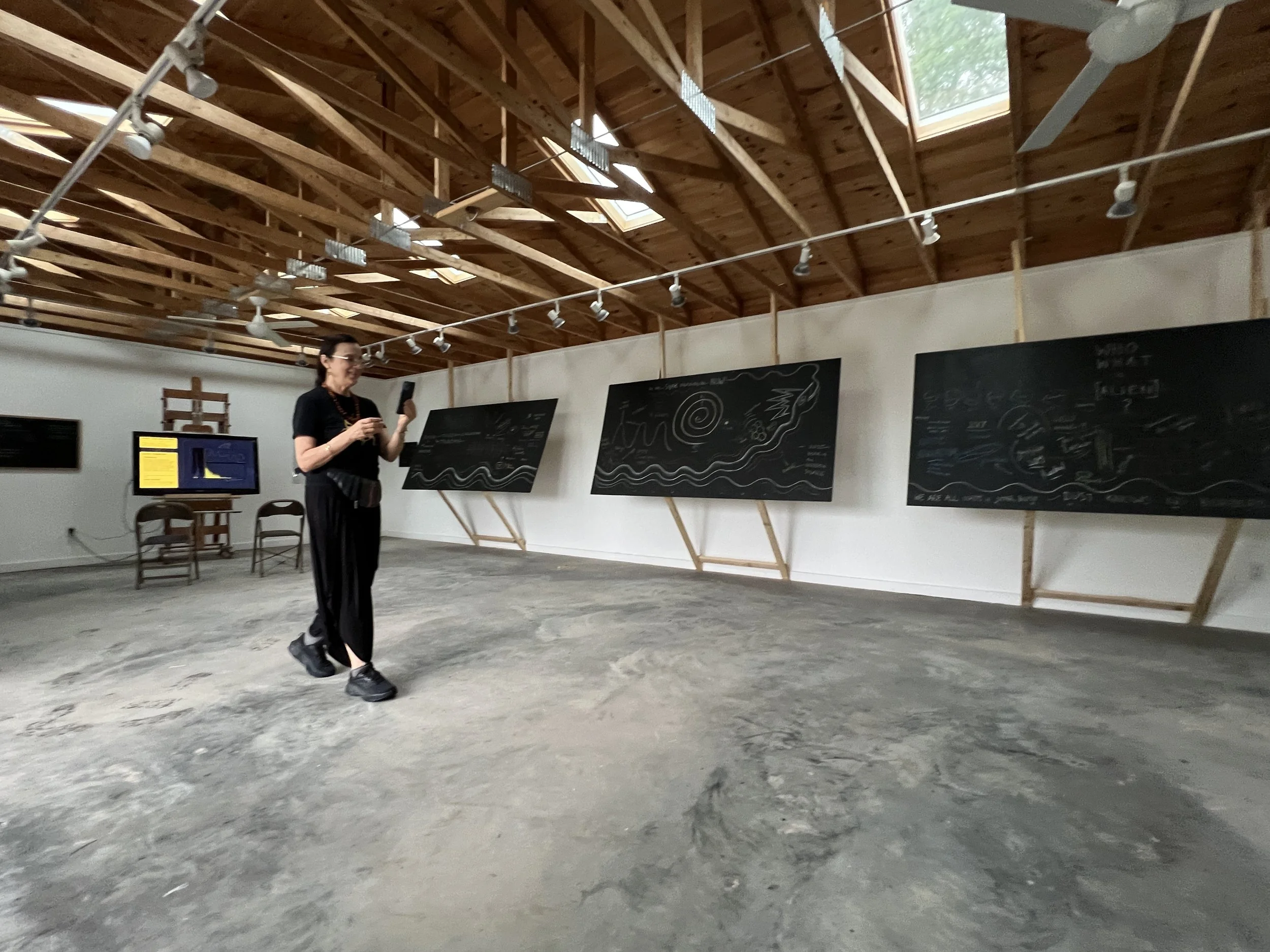
The project invites audiences into a sensorial space about energy, scale, and interdependence, positioning the gallery as a site where contemporary art becomes both intellectual inquiry and cultural catalyst. The exhibition featured video, interactive media, burned up plasma machine parts (UCLA Alfven wave research facility), photographic prints investigating the visual and auditory connection between bees, sunflowers, and solar flares; three 8 foot blackboards, angled at 45 degrees into the room became surfaces for Victoria’s performance lectures including: drawn symbols, scientific data and rigorous reflection.
For more information: [SUN]Flower Plasma – Victoria Vesnaand [ALIEN] Star Dust – Victoria Vesna
Victoria Vesna is an Artist and Professor at the UCLA Department of Design Media Arts and is Director of the UCLA Art|Sci center. With her installations she investigates how communication technologies affect collective behavior and perceptions of identity shift in relation to scientific innovation (PhD, University of Wales, 2000). Her work involves long-term collaborations with composers, nano-scientists, neuroscientists, evolutionary biologists and she brings this experience to students. Victoria has exhibited her work in 20+ solo exhibitions, 70+ group shows, has been published in 20+ papers and gave 100+ invited talks in the last decade. www.victoriavesna.com
Special thanks: Elaine Angelopolous, Nancy Simko and the Birdsong builders team.
PRESS RELEASE; TRI-FOLD -
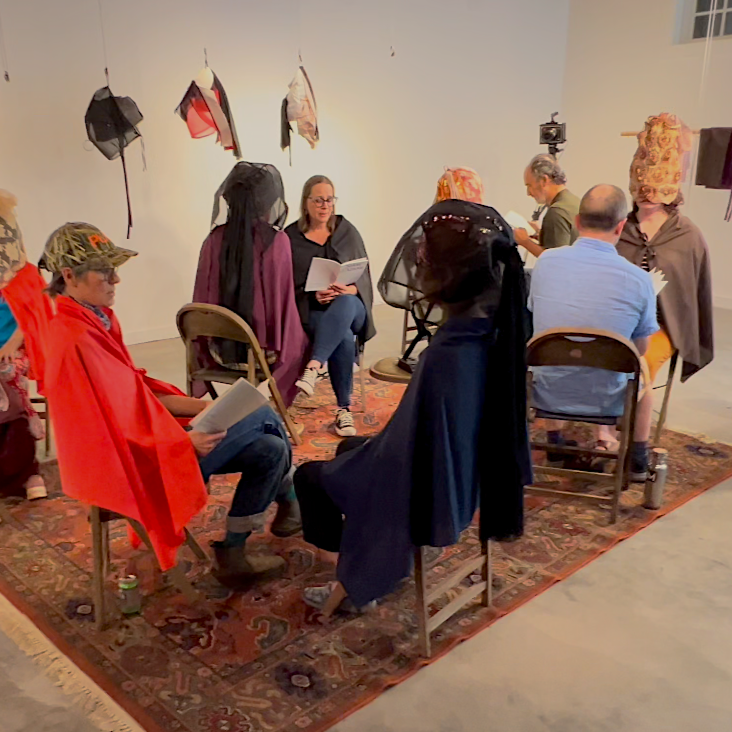
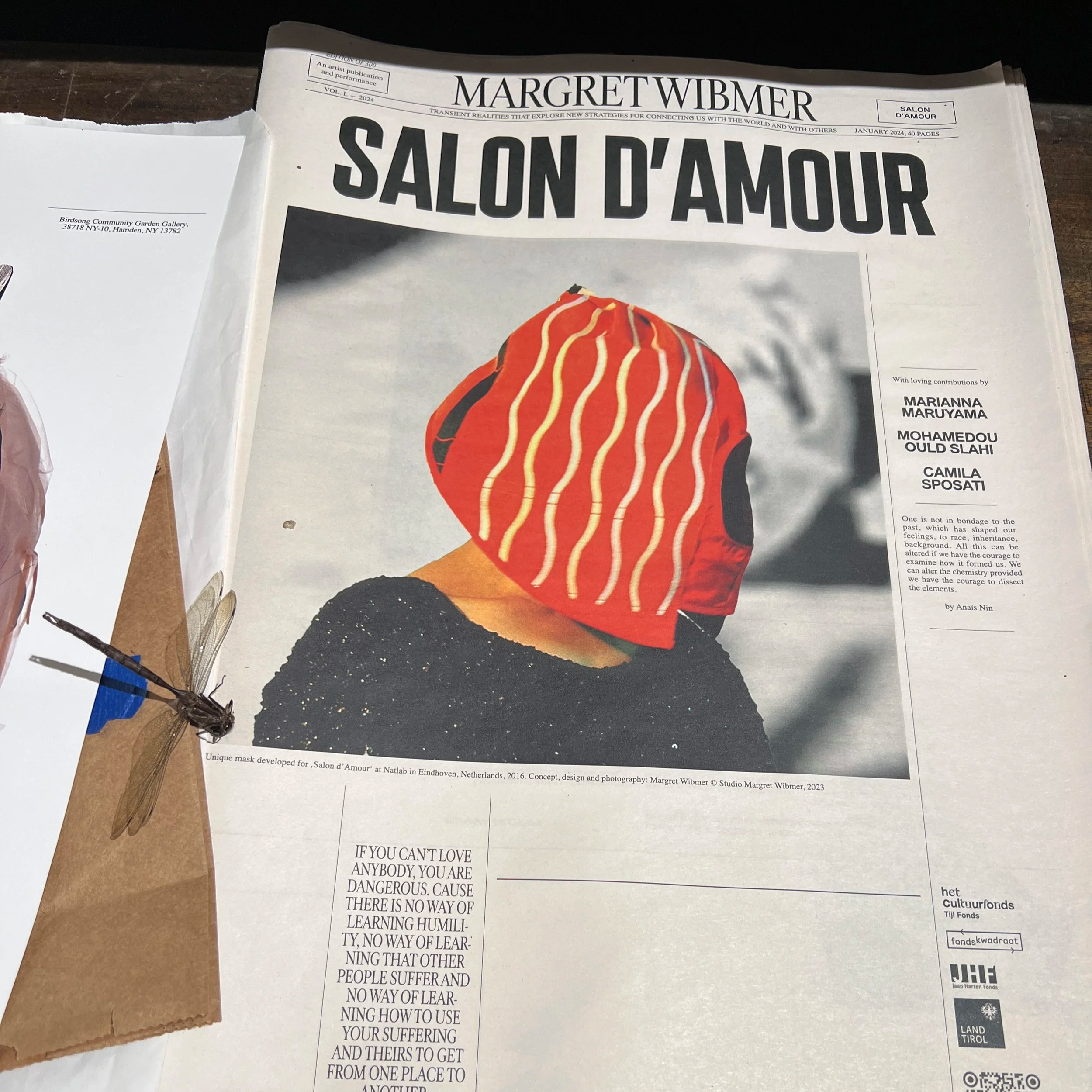
Salon d’Amour by Margret Wibmer unfolds as a living anthology and an exquisitely positioned immersive event, where love is staged, not as sentiment but as a radical, immersive practice. Paired participants enter a filmic environment. One cloaked in a textile collaged headpiece - thoughtfully designed and handmade by Wibmer - the other not. The public, taking on the roles of reciter/listener, (and witness) love letters by Baldwin, Kahlo, Le Guin, Cage, and others are voiced. In an intimate, polyphonic soundscape historical, cultural, and emotional distances collapse. Rooted in Wibmer’s socially engaged, transcultural research, the performance transforms anonymity into connection and listening into action, offering audiences a rare, time-bound ritual of vulnerability and reciprocity. In her North American premiere, in a limited-capacity setting, Salon d’Amour positions the gallery as destination for a deeply felt experience: intellectually absorbing, sensorially rich, and penetrating, precisely because it cannot be scaled or repeated.
Margret Wibmer is an internationally renowned visual and performance artist based in Amsterdam, The Netherlands. Her work explores the dynamic interplay between bodies, objects, and spaces. After formative years in New York City assisting minimalist artist Sol Lewitt alongside Kazuko Miyamoto, she developed a multidisciplinary practice spanning sculpture, video, photography, and participatory performance. www.margretwibmer.eu
Special thanks: Nancy Simko and Alana Siegel.
PRESS RELEASE -
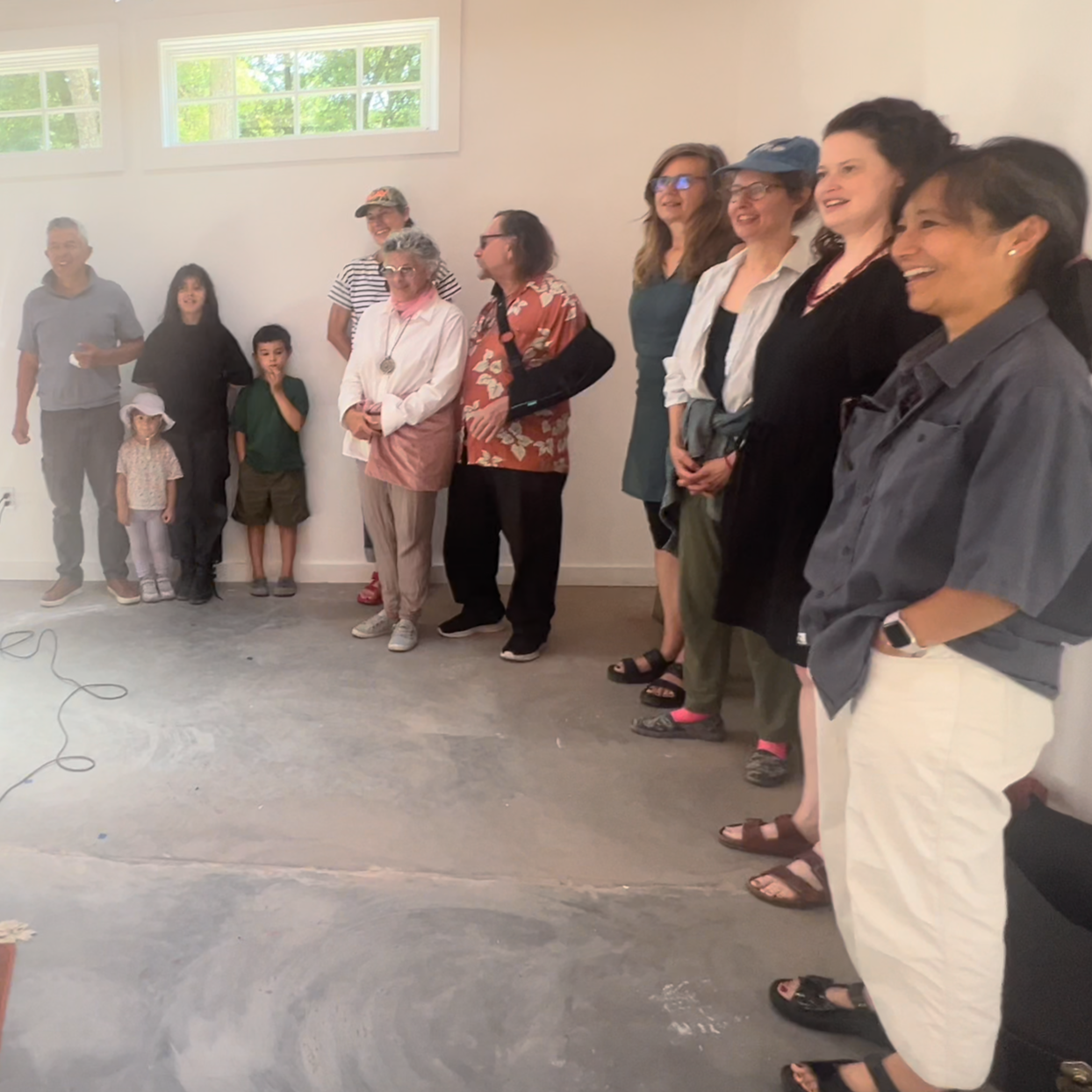
Marking the placement and exhibition of Shingle Valley, Fritz Horstman and Meredith M. Andrews (aka Spacelover) performed a concert in the gallery featuring new experimental sounds developed with Birdsong Farm visitors; alongside Spacelover’s original folk, blues, and bluegrass-inflected songs with harmonized banjo and guitar. Their albums can be found via this link and on major audio streaming platforms: www.fritzhorstman.com/music
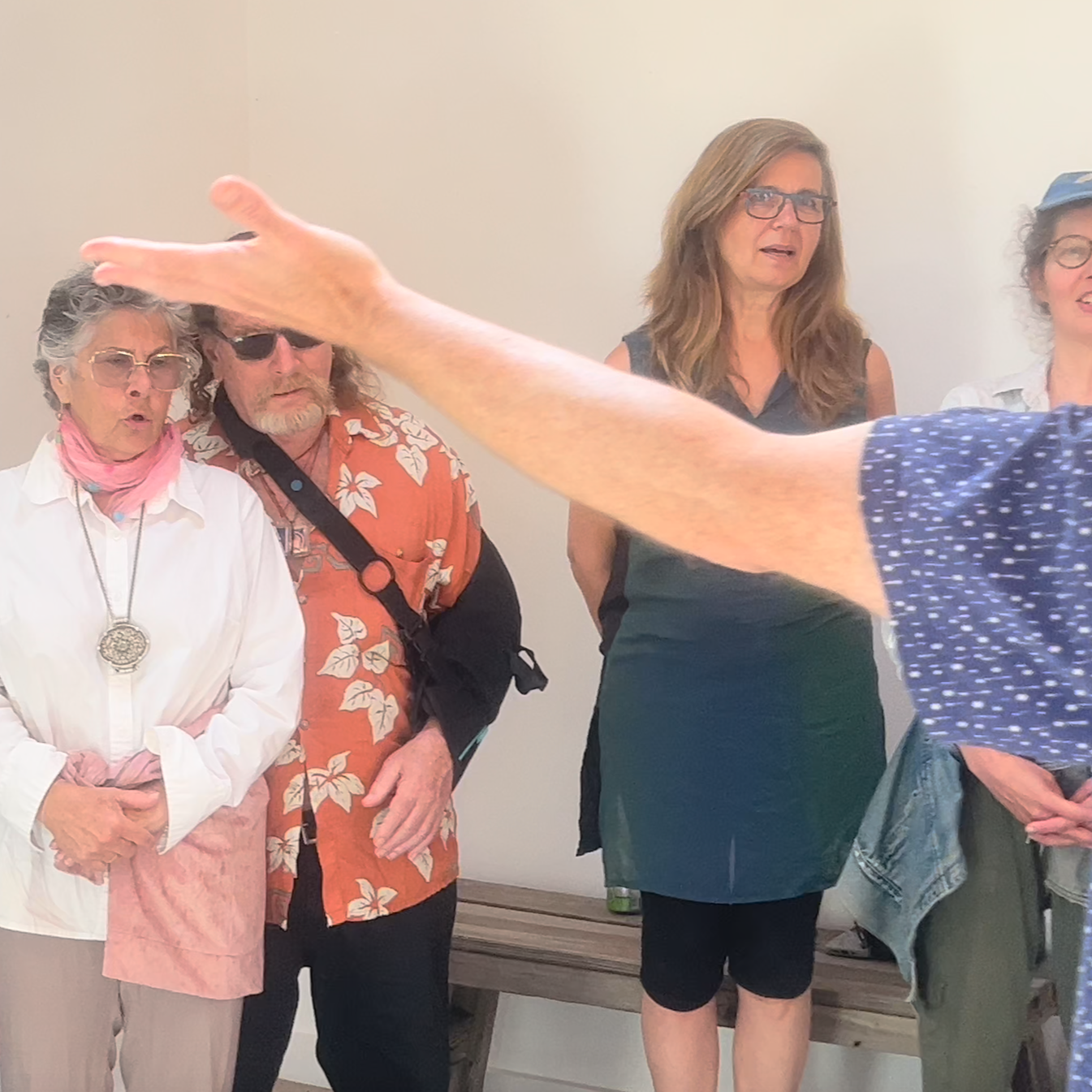
In collaboration with the community: adults, children and regional volunteer vocalists, performed a number of improvisational pieces led by Fritz Horstman who offered vocal prompts and instruction in the method of “Conduction.” Led by example, a few local children assumed the role of conductor and all improvised new and playful compositions. The layering of voiced sounds are consistent with Horstman’s three dimensional works and community audio project.
“Conduction” was an invention of the late composer, conductor and cornetist, Butch Morris (1947-2013). It is a system for live musical composition using hand signs to conduct the dynamics of a piece.
PRESS RELEASE -
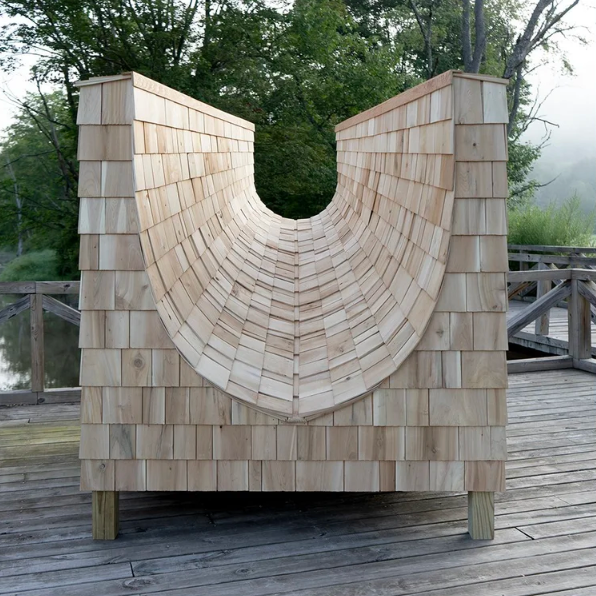
Shingle Valley, a 76 x 68 x 68 inch cedar sculpture, by Fritz Horstman was commissioned by ICAI and installed at Birdsong Farm Community Garden to temporarily rest alongside the East Branch of the Delaware River. The sculpture—part of Horstman’s U-Shaped Valley series—draws on the glacially formed landscape of the Delaware River Valley. Using the New England and Catskills vernacular tradition of shingled houses, Horstman layers materials, process and perception in ways that activate a contextual mode of looking, making the sculpture a relevant learning tool. The work allows viewers to experience subjective and objective perceptions as they unfold over time, revealing a non-hierarchical relationship between form and void that evoke spatial awareness, non-conceptual impressions, material process, and perceptual cognition. Shingle Valley will be relocated by the Cultural Activism International Project to the Catskill Rail Trail in Spring 2026, extending its function as a site for public engagement, learning and contemplation.
Fritz Horstman is an artist, educator, and curator based in Bethany, Connecticut. In his U-Shaped Valley work, Horstman looks at the relationship between form and void on a grand scale, both relatable – to the degree that we all understand the landscape – and unfathomable, in the scale of geologic time. Focusing on receded glaciers and empty valleys naturally invites a conversation about environmentalism. www.fritzhorstman.com
Special thanks: The Birdsong builders team.
Press Release -
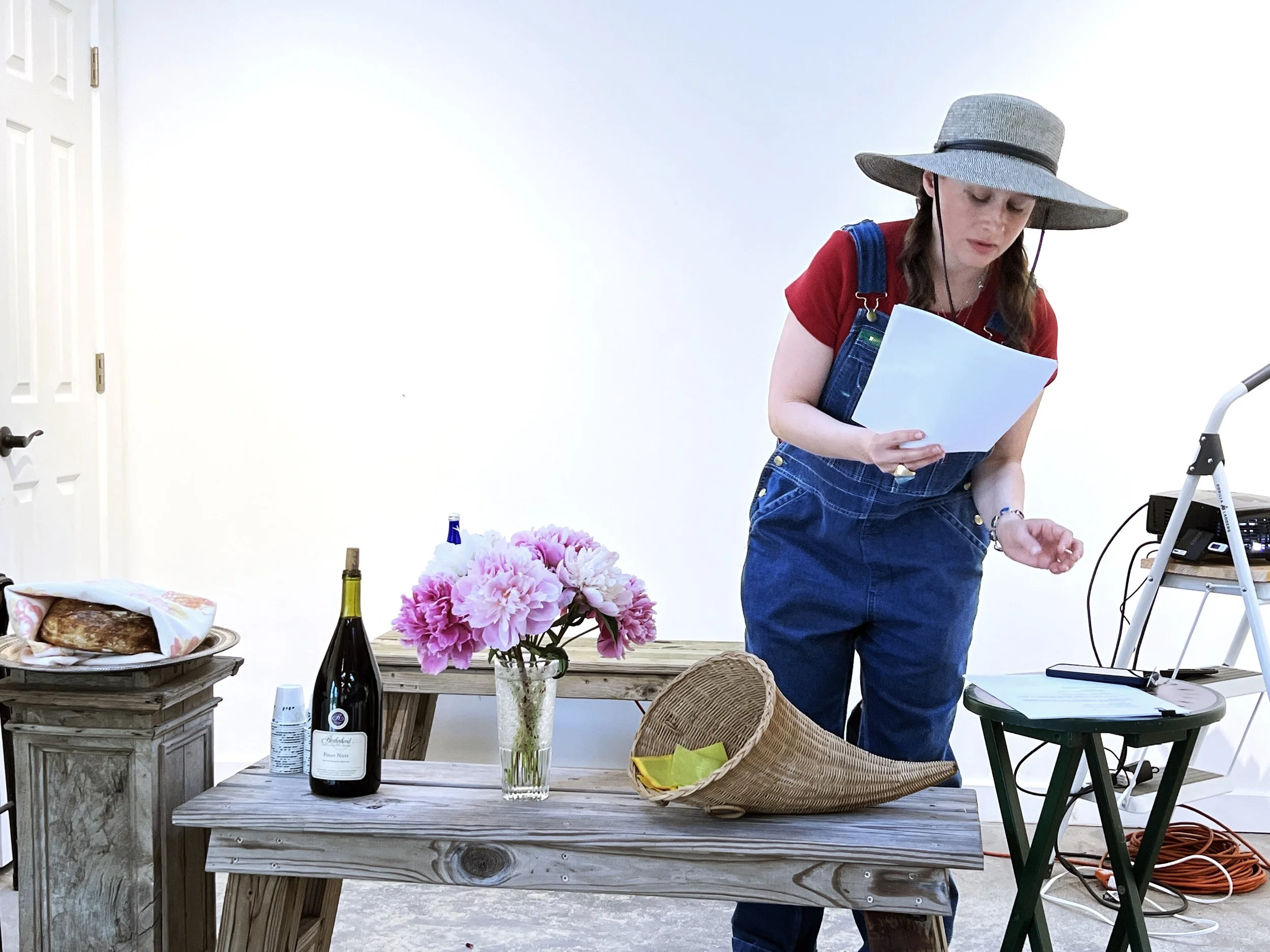
Halcyon Reading Series, curated by Alana Siegel
Each month Siegel invited a poet(s) to create a Poetry Talk & Workshop 5:30pm-8pm
Dates & Readers:
Friday, June 13, 5:30-8pm
Alana Siegel Halcyon Series: On the Reciprocity of Harmony, 7 Parts
Discoursing on the nature and vision of HALCYON
Friday, July 11, 5:30-8pm
Deirdre Larkin & Tom Groves Antiphon/Schmantiphon
Friday, August 22, 5:30-8pm
Daria Fain, Robert Kocik and Brenda Ijima Feeding Off Each Other
Series commissioned by the Institute for Cultural Activism International Project
Presented in cooperation with Birdsong Farm Gallery. Thank you to Alana Siegel and fellow poets! -
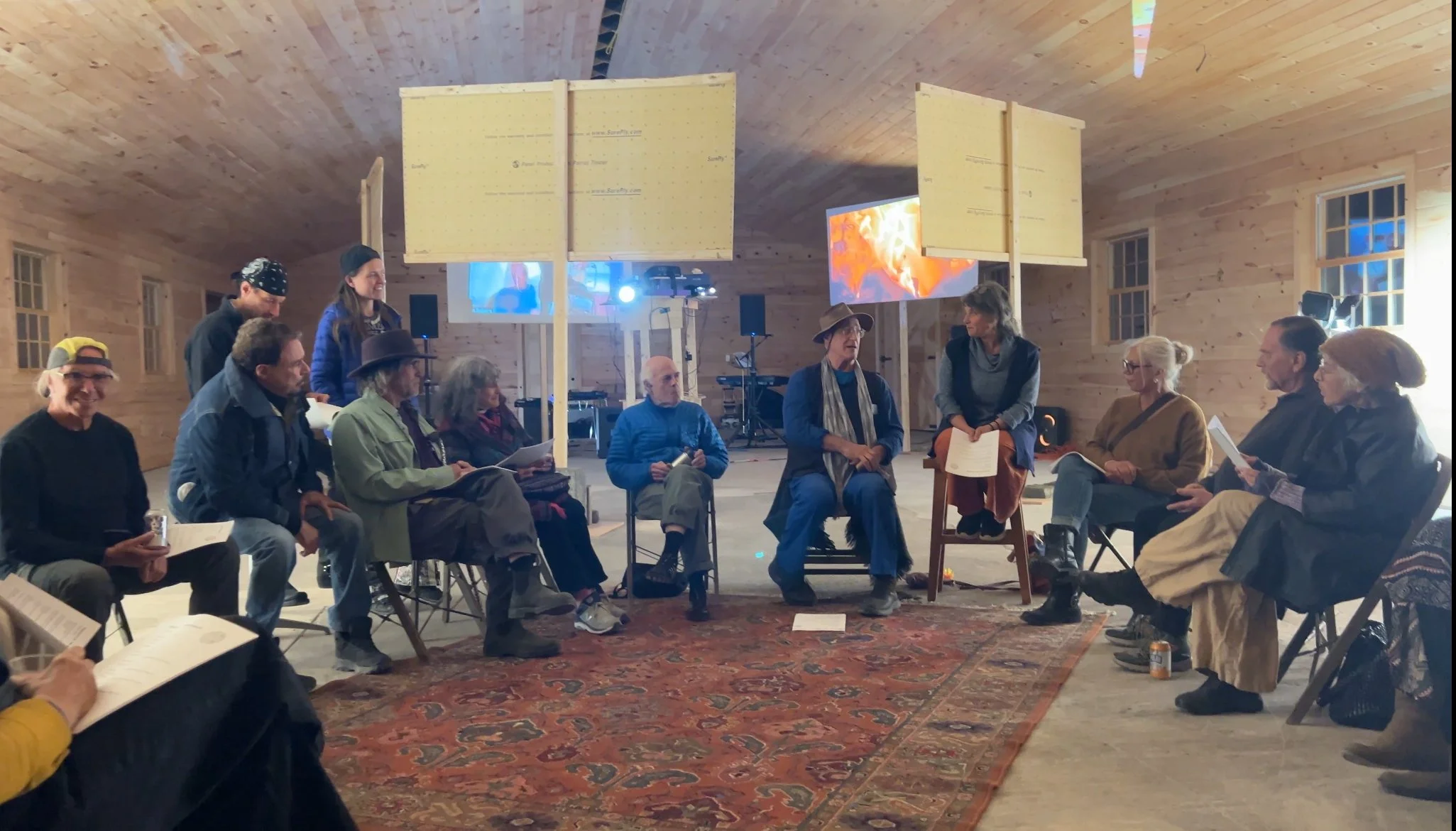
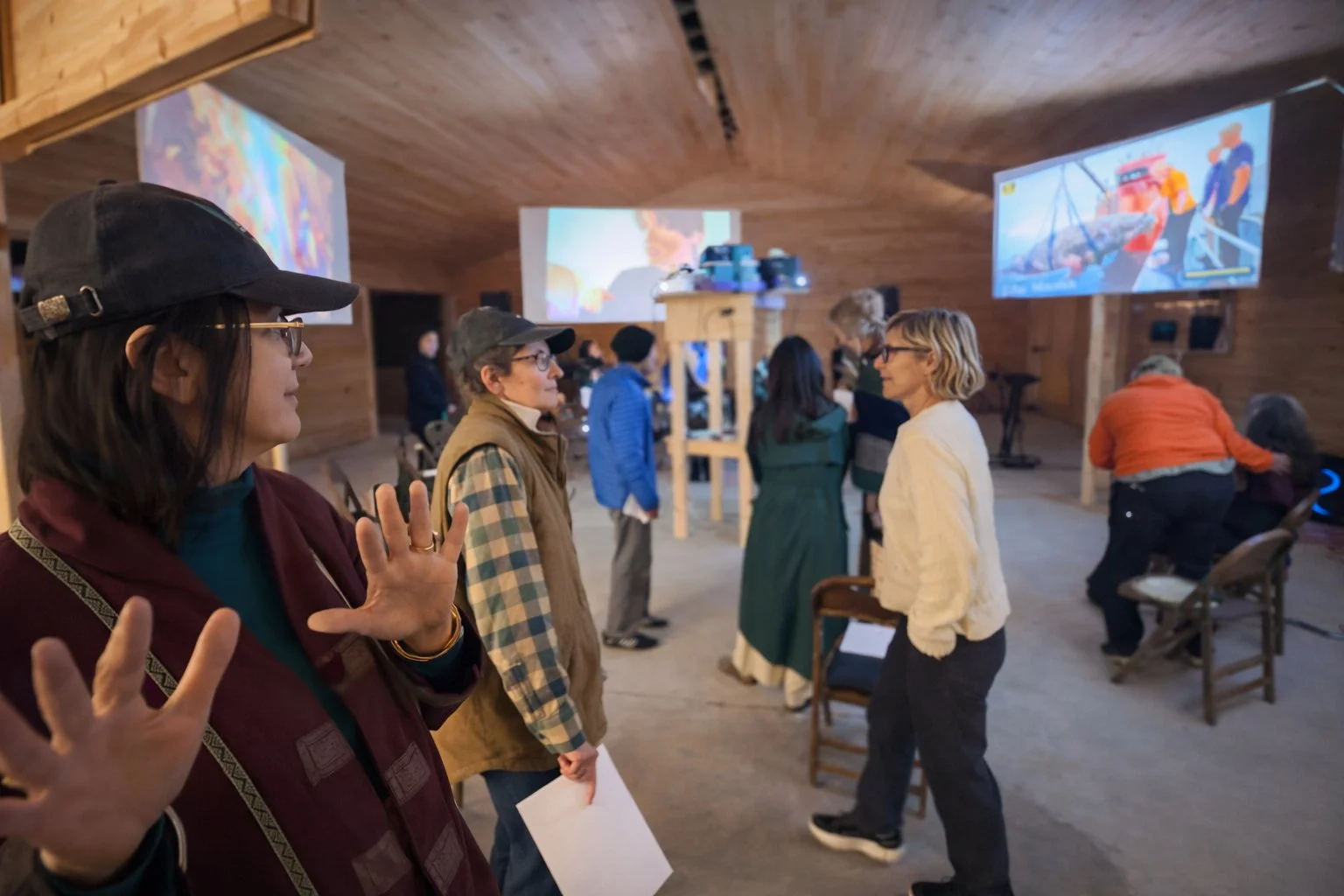
ICAI concluded its Public Art for Dialogues Summer 2025 Program at Birdsong Farm with WE DO: SURFING THE APOCALYPSE KARAOKE (STAK), a participatory work by John DiLeva Halpern. The gathering brought 40-50 individual from a wide regional radius convened over local and international topical issues. The event transitioned to an immersive 5-screen panoramic film installation projecting contrasting images of global and regional crisis and proactive community projects - positioning culture itself as the site of inquiry. Group singing, Karaoke style, infused a sense of community engagement. The event reclaimed “apocalypse” referencing its ancient Greek meaning, “revelation” or “disclosure” - it comes from apo- (away/off) and kalypso (to cover), meaning to take cover off, or uncover – aligning with ICAI’s understanding that creative empowerment emerges when people analyze and deconstruct problems revealing new potentials and narratives.
First STAK iteration with live band: Bruce Milner and Rob Stein, members of the Bobcats (a Bob Dylan tribute band based in Woodstock, NY). Song books were passed around with a selection of love songs. Stepping in with drums & percussions, local musician Doc Reinhart.
APOCALYPSE KARAOKE(S) foster synergy through cross-silo dialogue, bridging sensibilities and mentalities, demonstrating how shared agency and cultural assembly are consequential to sustainable, interconnected futures.. Supported by the Roxbury Arts Group through a re-grant from the New York State Council for the Arts.
STAK, was inspired by ICAI’s QR Code Portal events developed with Emily Marie Harris and Margaret Wibmer, in Capri, Italy, in 2022. This event has been presented at various locations including: Rosendale Art Farm, Kingston, NY; ICAI: Kunsthalle/Delhi, Delhi, NY; Birdsong Farm Gallery, Hamden, NY to engage the public in dialogues about collective futures.
Special thanks: Beth Grey (project manager) -
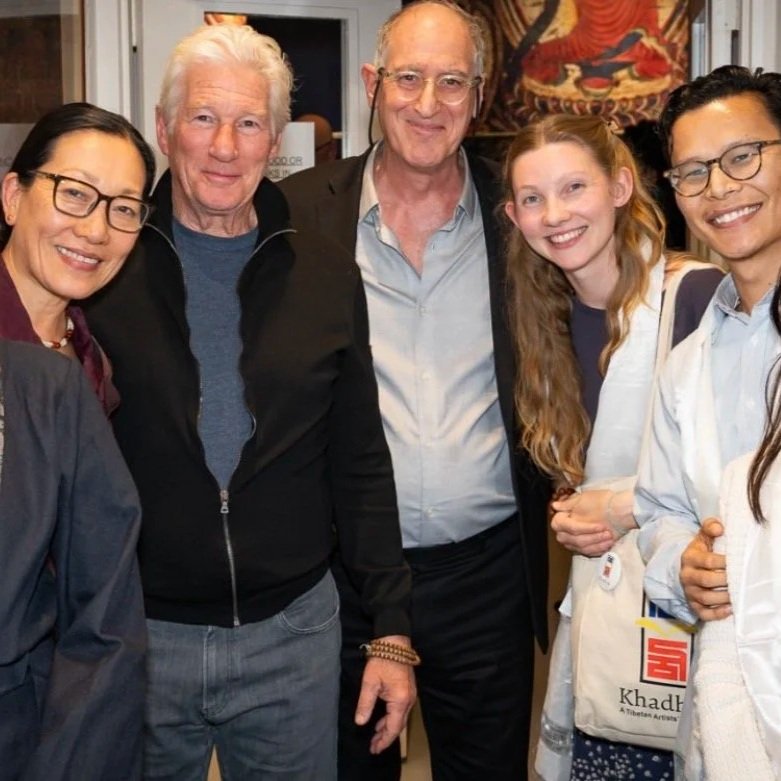
This year culminated in the winter, as CAIPI leveraged its full resources toward a major cultural intervention, Partnership with Wisdom of Happiness, a film featuring the Dalai Lama, championed by Richard Gere and Oren Moverman. We supported a five-week theatrical run, facilitated 17 public Q&A talk-backs with John DiLeva Halpern and invited guests: Robert Thurman, Michael Imperioli and Celeste Lecesne, coordinated grassroots outreach, and amplified the film through radio, print, and digital platforms - reaching over 123,000 documented engagements. This campaign did not offer escape from chaos, but a method for meeting it: compassion, hope, interdependence, and shared attention, as collective power.